SWAINSON’S HAWK
(Buteo swainsoni) - focusing on California populations
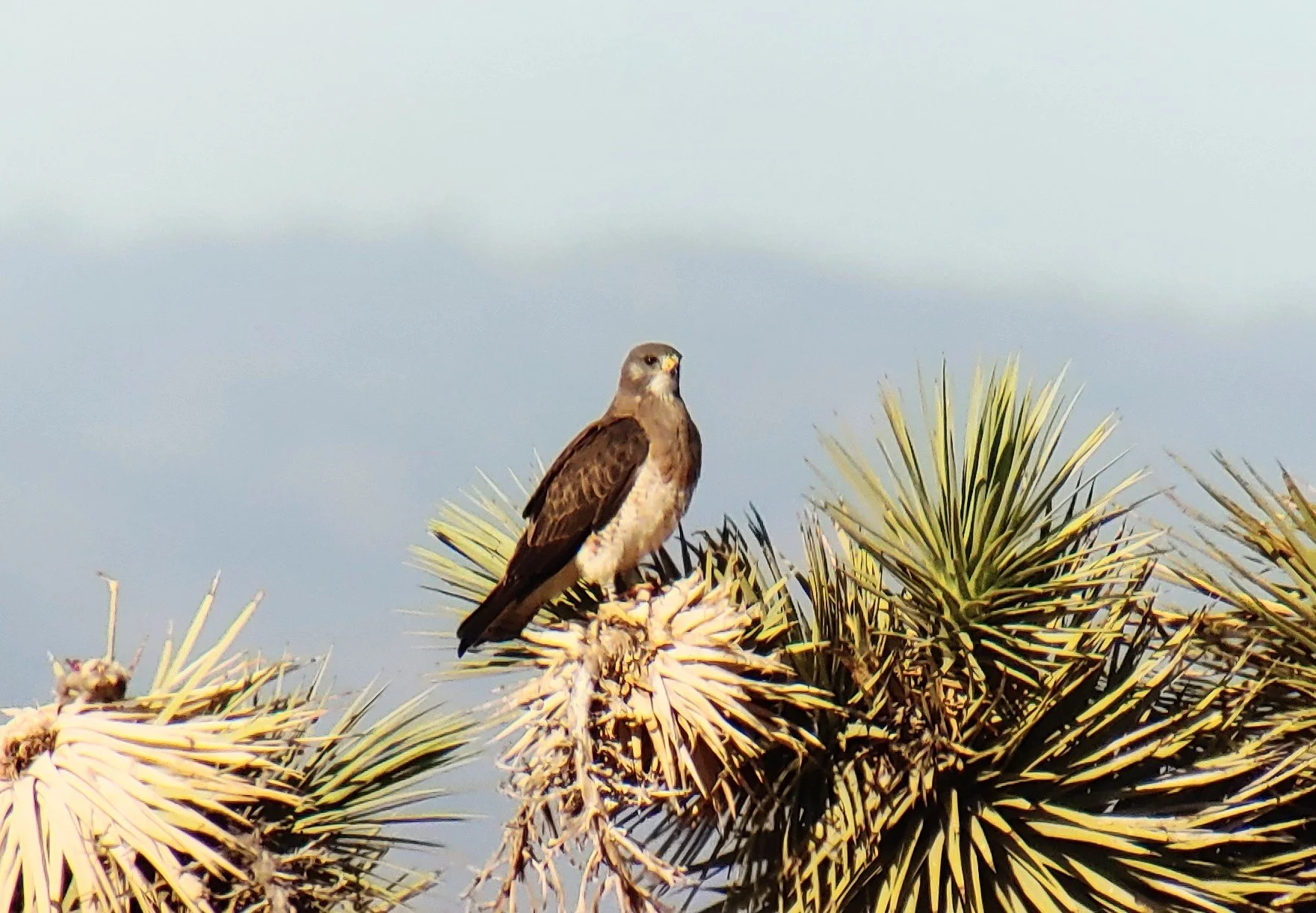
A Swainson’s Hawk perches on a Joshua Tree.
Photo credit: Pete Bloom (all rights reserved)
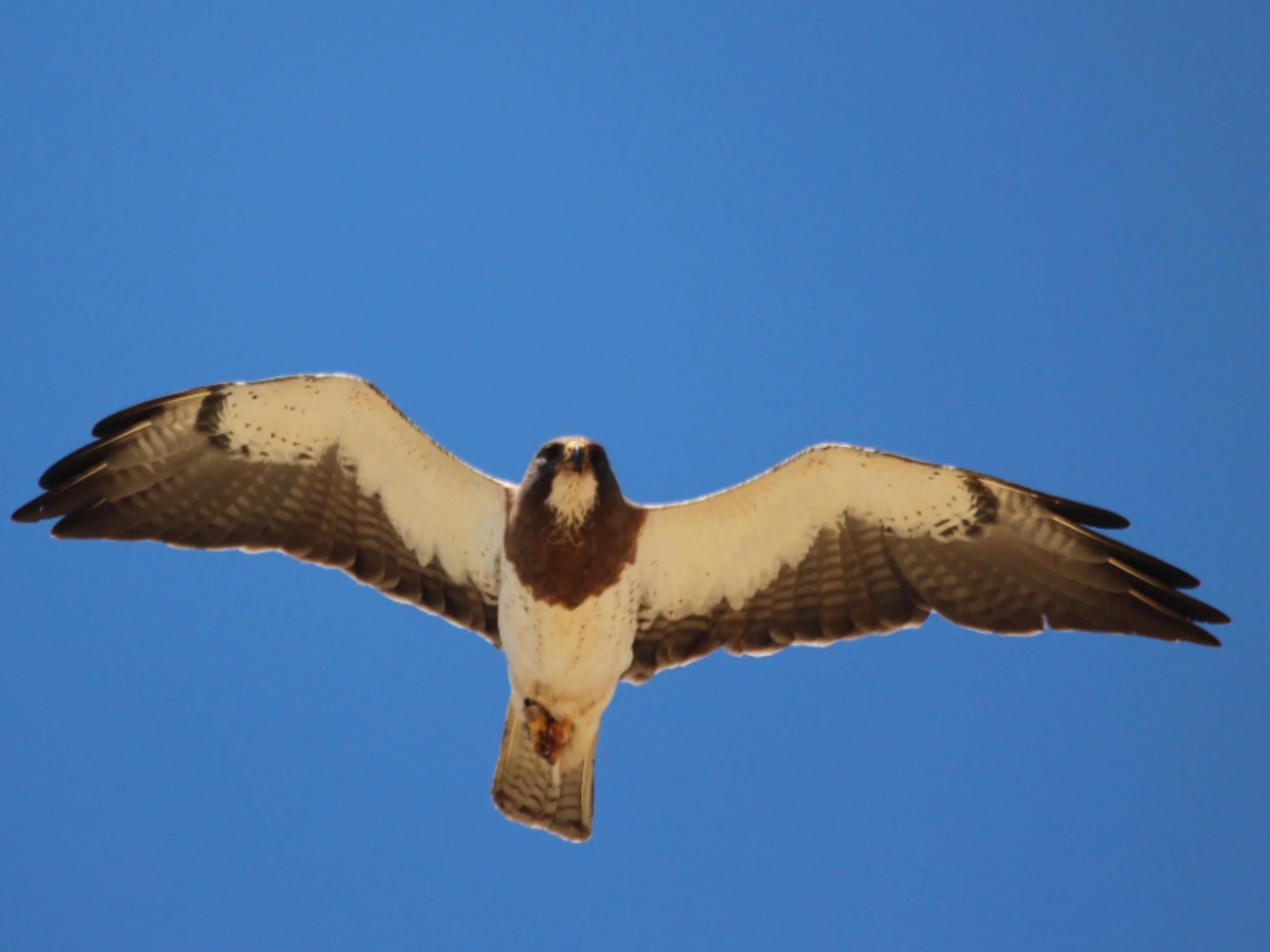
Swainson’s Hawk showing the dihedral wing shape while soaring.
Photo credit: Pete Bloom (all rights reserved)
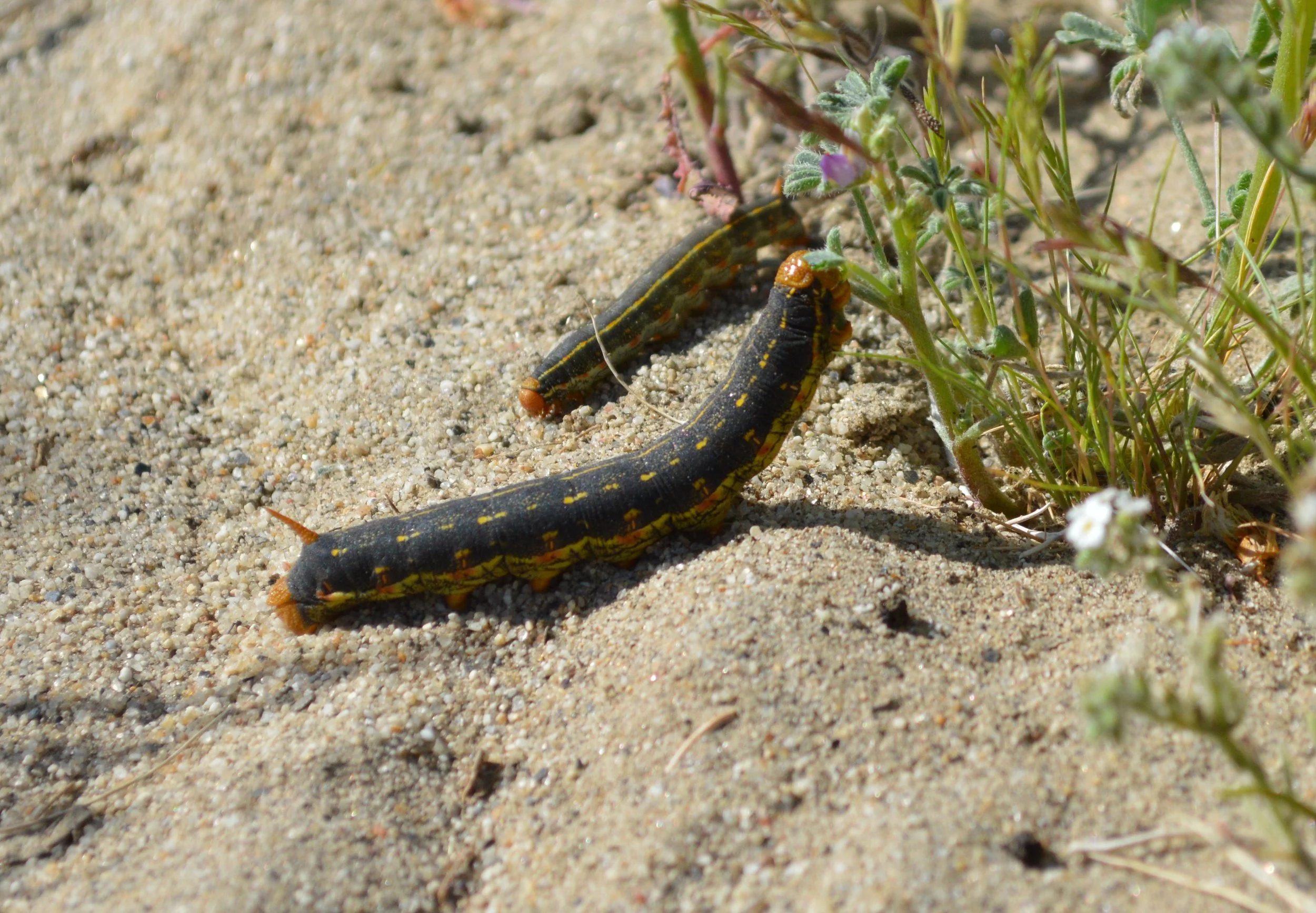
Caterpillars in the Anza Borrego Desert during the 2016 “superbloom”. The timing of the arrival of these and other insects coincide not only with the brief spring re-vegetation in the desert but also with the Swainson’s Hawks return to California, giving them plenty of energy to finish their journey back to their nesting grounds.
Photo credit: Nicollet Overby (all rights reserved)
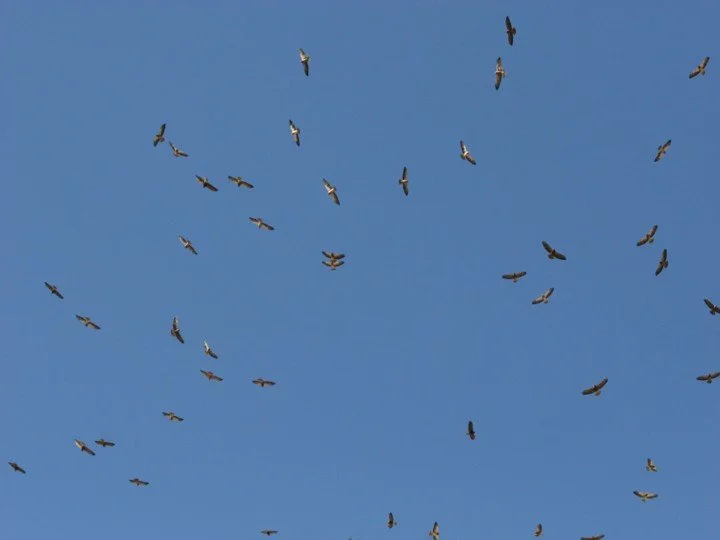
A kettle of Swainson’s Hawks seen overhead.
Photo credit: Pete Bloom (all rights reserved)
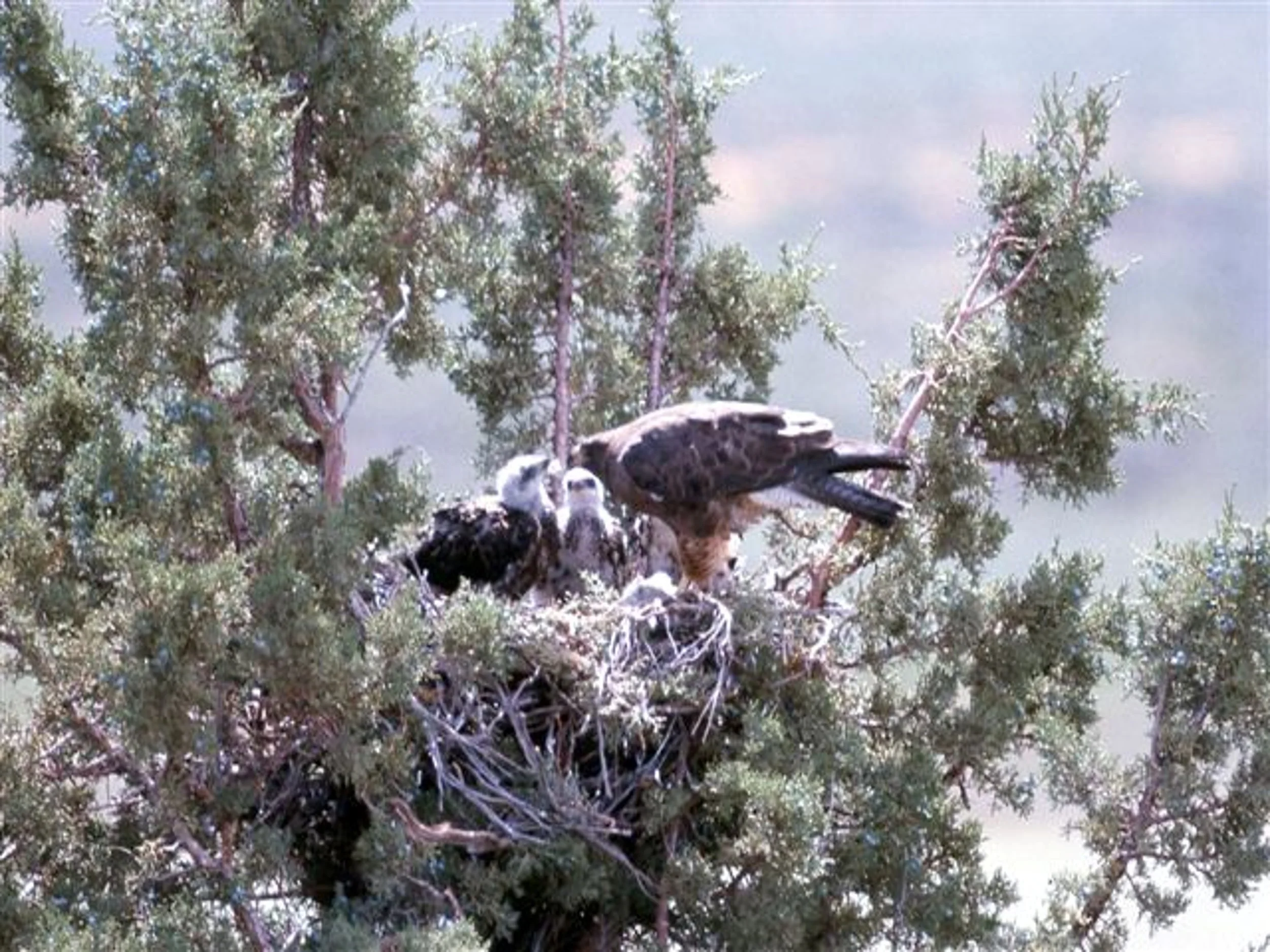
Photo credit: Pete Bloom (all rights reserved)
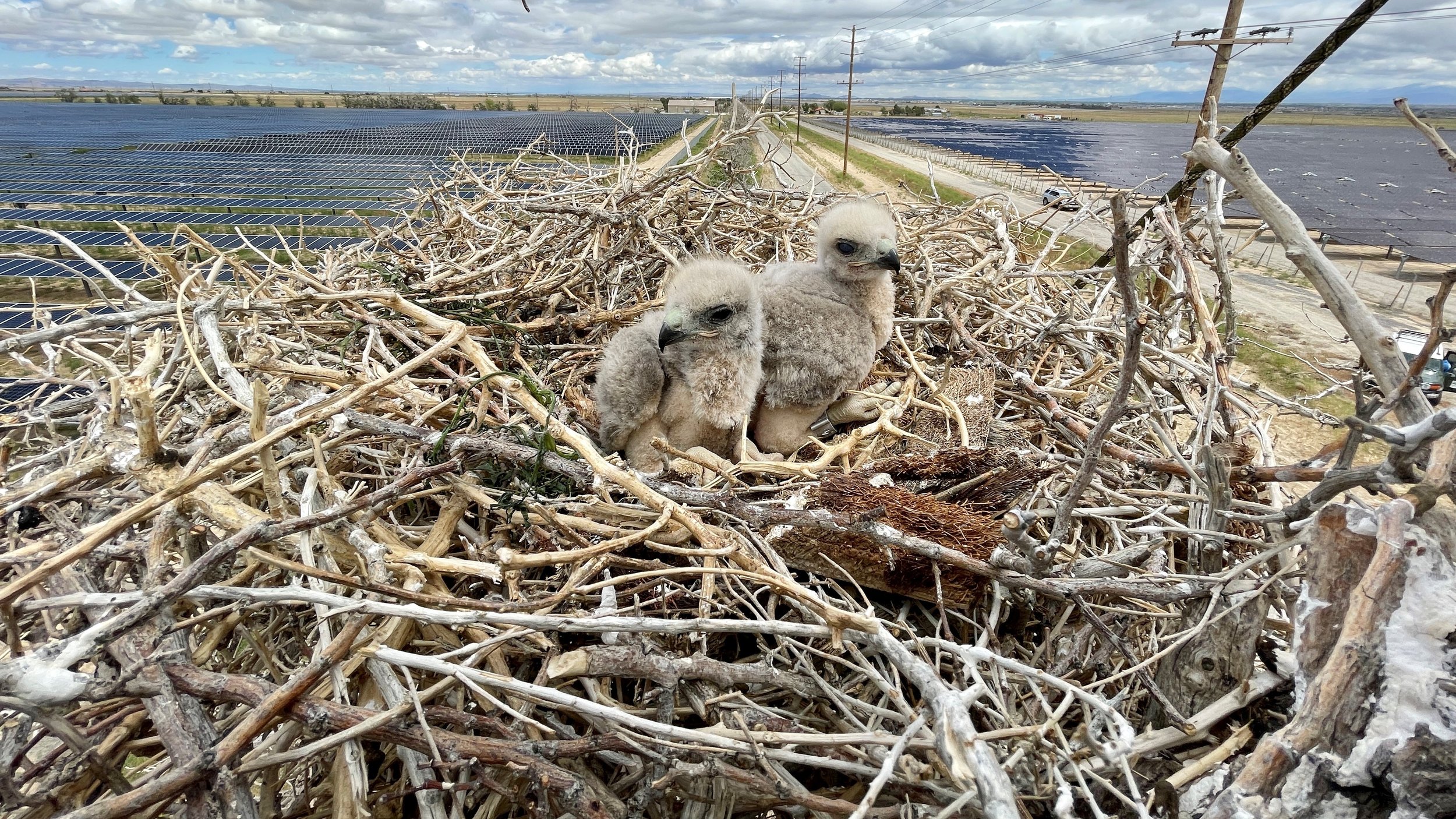
A Swainson’s Hawk nest surrounded by industrial solar fields in California.
Swainson’s Hawks are large Buteos with a breeding range west of the Mississippi River, found mostly in open grasslands and rural agricultural areas from the Great Plains of the American midwest to the west coast (throughout most of California, eastern Oregon, eastern Washington State & lower British Columbia).
In comparison with other common Buteos of the west, Red-tailed Hawks are typically more robust in appearance while Red-shouldered Hawks are much smaller in stature than Swainson’s Hawks.
Swainson’s Hawks come in several different color morphs (light, dark, and intermediate, with differing patterns in every morph), so plumage in general is not the best way to identify a Swainson’s Hawk. But there are other distinguishing features to look for, including how they hold their wings while soaring (“dihedral” flight pattern - wings are held slightly elevated when soaring, in a shallow “V” shape, rather than flat out to their sides), and when perched, the most distinctive feature unique to Swainson’s Hawks is that their folded wingtips reach to or past the end of their tail. These extended wingtips can also be noticed by a keen observer when the bird is in-flight.
Swainson’s Hawks have one of the most remarkable migrations of any raptor in the world. In autumn, groups of hundreds to thousands of individuals take off from their breeding grounds, traveling south in large groups called “kettles” through Mexico and Central America, and down into South America, eventually ending up in Argentina for the winter months (approximately 7k miles!).
During the breeding and nesting seasons, their diet mainly consists of vertebrates such as rodents, reptiles, and occasionally small birds. This is also what they feed their chicks. During other parts of the year, including their winter stay in Argentina and at the end of their migration back north, they will consume large amounts of invertebrates (insects).
The Anza Borrego desert region in California is a stopover hotspot for the Swainson’s Hawks migrating along the Pacific Flyway, especially in years with excessive rains which create vegetative “superblooms”, which in turn leads to an overabundance of insects such as caterpillars, which are rich in essential nutrients like fat and protein to sustain them on the final leg of their journey. This is especially important for those that nest in the eastern regions of the Pacific Northwest and have a much longer journey than those nesting within California.
Swainson’s Hawks are nomadic for the first 1-3 years of their life. They are also philopatric, which means that they have a tendency to reside in their area of birth or return there after a period of absence. They also maintain a high degree of nest site fidelity, which means they usually return to the same nest location/territory year after year. These two characteristics, when combined with degradation of nesting habitat (usually human-caused) can lead to a conundrum known as a “fidelity-induced ecological trap” - this is a situation in which “formerly reliable environmental cues trigger maladaptive behaviors or decisions, resulting in reduced individual fitness and potentially negative effects on population viability”. (Schlaepfer et al. 2002). For example, in the Antelope Valley of California, the rapid environmental changes that have and are occurring (urban, rural, green energy, invasive weeds, and loss of alfalfa croplands) in combination with philopatry and strong nest-site fidelity may result in an ecological trap for Swainson’s Hawks, which will consistently impede the ability of the species to recover.
The breeding/nesting season in California begins when the hawks return from Argentina around late March and continues through mid-July. The departure of successful breeding pairs migrating back to Argentina is typically between August & September, with some exceptions (i.e. individuals with failed nests may begin their journey sooner).
In 2018, California’s Senate Bill 100 became law, which requires only renewable and zero-carbon energy resources be utilized to supply 100% of electric retail sales to customers by 2045. The massive scale of this requirement is causing projects to be developed at break-neck speed, and it is disproportionately affecting the desert regions where populations of Swainson’s Hawks have been slowly attempting recovery since their catastrophic decline prior to the 1970’s.
RESEARCH
In 1979, Pete Bloom was contracted to conduct an extensive statewide survey of nesting or paired Swainson’s Hawks throughout their historical range within California, in order to determine if a long-suspected decline of the species, once noted to be numerous in their historical range, was in fact true. His findings conclusively proved a significant decline (90%) of Swainson’s Hawks in California, which led to the Swainson’s Hawk being listed as a state-threatened species in 1983, and established a baseline for future population studies.
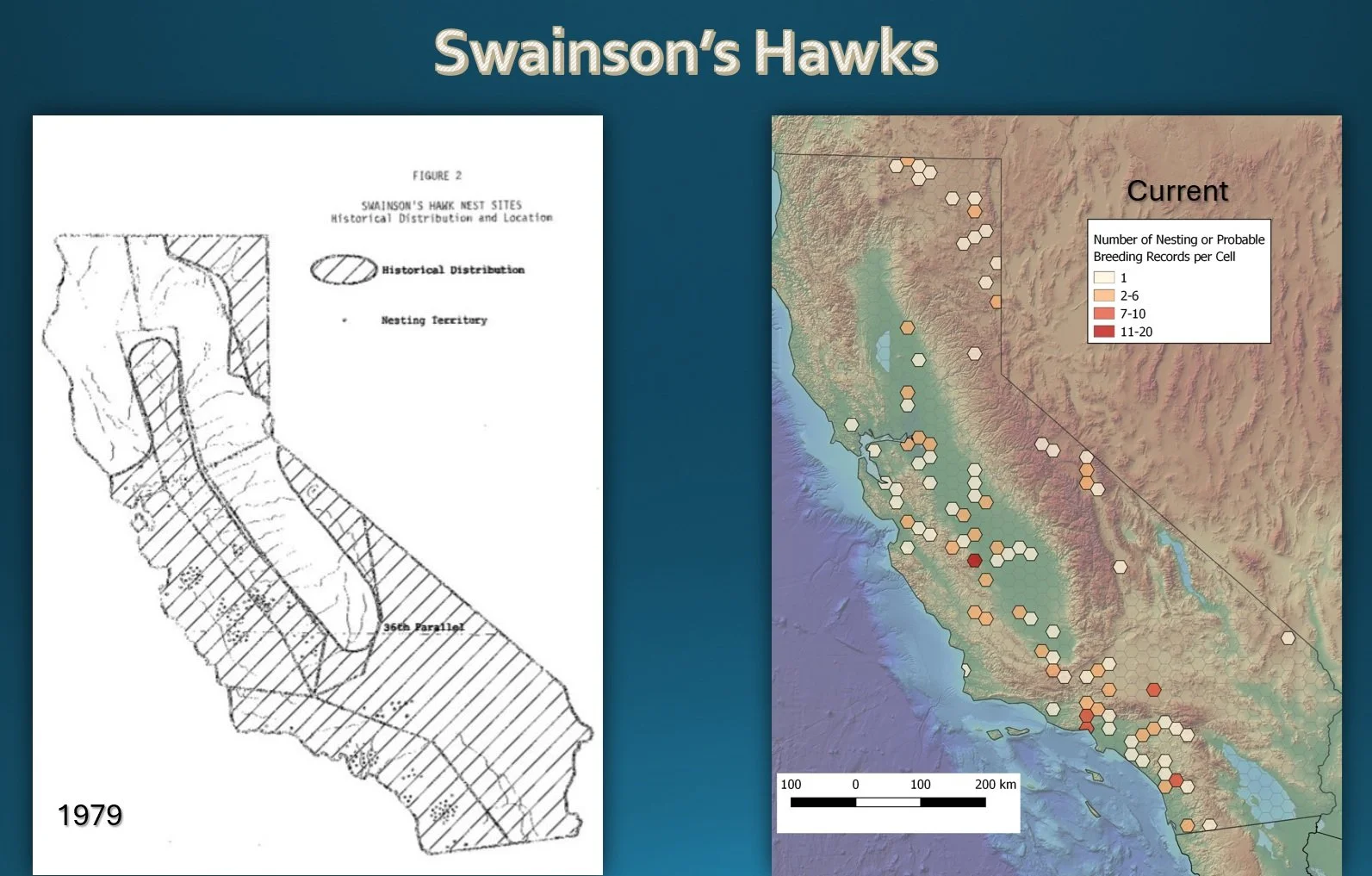
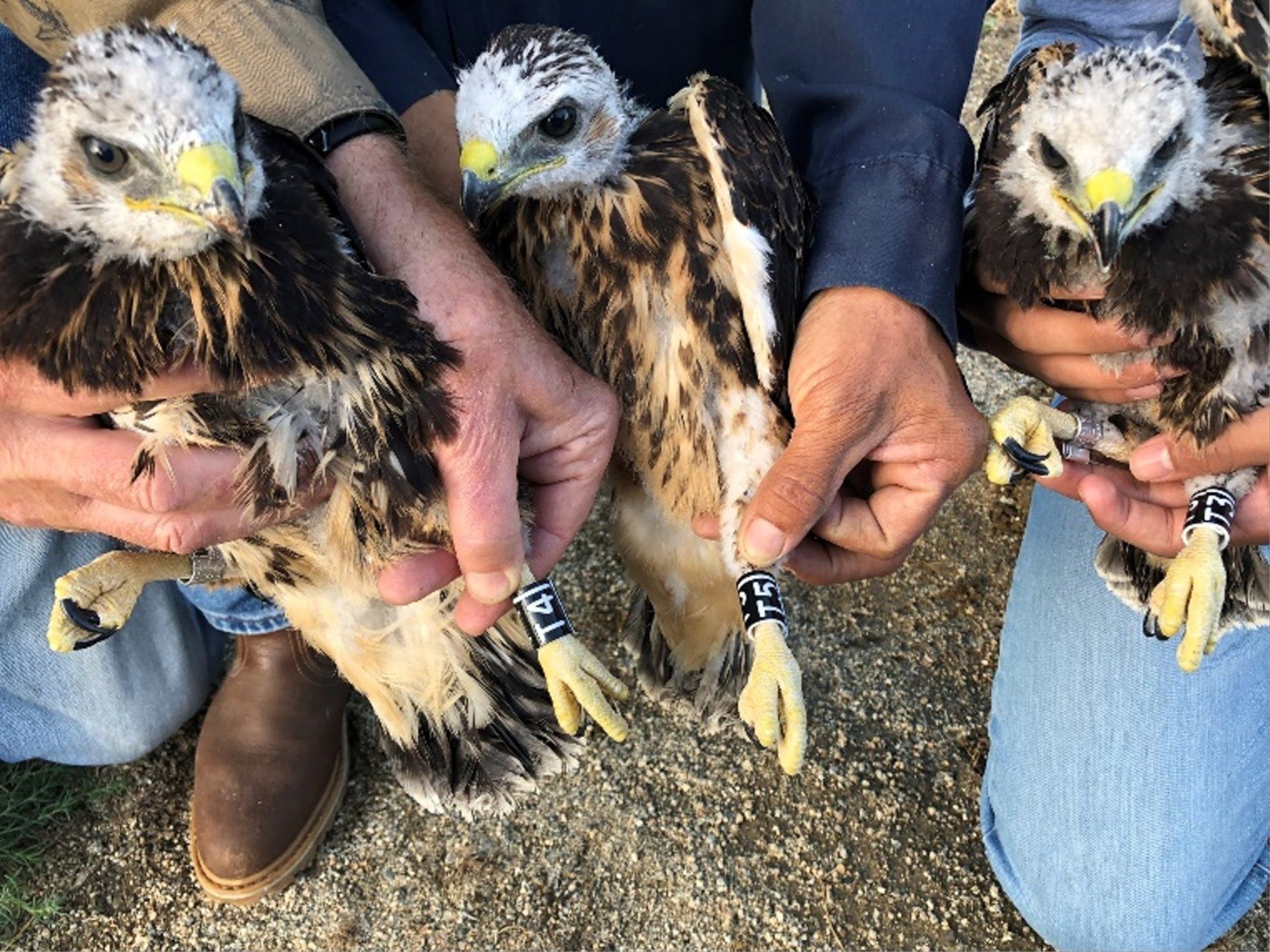
Pete has been involved in Swainson’s Hawk research and conservation since his report was published by the California Department of Fish & Wildlife in 1980. The use of banding and satellite tracking is invaluable for studying these extreme migrators with high philopatry and site-fidelity tendencies (see our page on bird banding for more info).
Swainson’s Hawk research publications authored by Pete Bloom:
Bloom, P. H., Barton, R. G., & Kuehn, M. J. (2023). Swainson’s Hawk nesting population in the Antelope Valley of the western Mojave Desert, California. Western Birds, 54(1), 32-43.
Furnas, B. J., Wright, D. H., Tennant, E. N., O’Leary, R. M., Kuehn, M. J., Bloom, P. H., & Battistone, C. L. (2022). Rapid growth of the Swainson’s Hawk population in California since 2005. Ornithological Applications, 124(2).
Kane, S. A., Vennum, C. R., Woodbridge, B., Collopy, M. W., Bloom, P. H., & Briggs, C. W. (2020). Age distribution and longevity in a breeding population of Swainson’s Hawks, Buteo swainsoni. Journal of Ornithology, 161(3), 885-891.
Goldstein, M. I., Bloom, P. H., Sarasola, J. H., & Lacher, T. E. (1999). Post-migration weight gain of Swainson's Hawks in Argentina. The Wilson Bulletin, 428-432.
Bloom, P. H., Henckel, J. L., Henckel, E. H., Schmutz, J. K., Bryan, J. R., Detrich, P. J., ... & McKinley, J. O. (1992). The Dho-Gaza With Great Horned Owl Lure: An analysis of its Effectiveness. Raptor Res, 26(3), 167-178.
Risebrough, R. W., Schlorff, R. W., Bloom, P. H., & Littrell, E. E. (1989). Investigations of the decline of Swainson's Hawk populations in California. Journal of Raptor Research, 23(3), 1.
Schlorff, R., & Bloom, P. H. (1984). Importance of riparian systems to nesting Swainson’s Hawks in the Central Valley of California. California Riparian Systems: Ecology, Conservation, and Productive Management (RE Warner and KM Hendrix, Editors). University of California Press, Berkley, CA, USA, 612-618.
Other research by Pete’s trusted colleagues and mentees include:
Barton, R. (2026). Habitat Selection and Space Use of the California State-threatened Swainson's Hawk (Buteo Swainsoni) in the Western Mojave Desert (Master’s Thesis, California State University, Northridge).
Meisman, E. (2026). Testing adaptive habitat selection in breeding Swainson's hawks (Buteo swainsoni). (Master’s Thesis, Humboldt University.
Briggs, C. W., Farner, C., Hunt, M. G., & Vennum, C. R. (2024). Daily diet and temporal variation of Swainson’s Hawk prey deliveries. Journal of Raptor Research, 58(4), 505-512.
Vennum, C. R. (2022). Demographic consequences of agricultural practices on a long-lived avian predator. (Doctoral Dissertation, Colorado State University).
Airola, D. A., Estep, J. A., Krolick, D. E., Anderson, R. L., & Peters, J. R. (2019). Wintering areas and migration characteristics of Swainson’s Hawks that breed in the Central Valley of California. Journal of Raptor Research, 53(3), 237-252.
Briggs, C. W., Collopy, M. W., & Woodbridge, B. (2012). Correlates and fitness consequences of natal dispersal in Swainson's Hawks. The Condor, 114(4), 764-770.
Estep, J. A., & Dinsdale, J. L. (2012). Distribution, abundance, and habitat associations of nesting Swainson’s Hawks in the central San Joaquin Valley, California. Central Valley Birds, 15(4), 84-107.
Briggs, C. W., Woodbridge, B., & Collopy, M. W. (2011). Correlates of survival in Swainson's Hawks breeding in northern California. The Journal of Wildlife Management, 75(6), 1307-1314.
Briggs, C. W., Collopy, M. W., & Woodbridge, B. (2011). Reproduction versus recruitment of Swainson's hawks in the Butte Valley, California. The Condor, 113(3), 547-554.
Hull, J. M., Anderson, R., Bradbury, M., Estep, J. A., & Ernest, H. B. (2008). Population structure and genetic diversity in Swainson’s Hawks (Buteo swainsoni): implications for conservation. Conservation Genetics, 9(2), 305-316.
Canavelli, S. B., Bechard, M. J., Woodbridge, B., Kochert, M. N., Maceda, J. J., & Zaccagnini, M. E. (2003). Habitat use by Swainson's Hawks on their austral wintering grounds in Argentina. Journal of Raptor Research, 37(2), 4.
Goldstein, M. I., Lacher, T. E., Zaccagnini, M. E., Parker, M. L., & Hooper, M. J. (1999). Monitoring and assessment of Swainson's Hawks in Argentina following restrictions on monocrotophos use, 1996–97. Ecotoxicology, 8(3), 215-224.
Woodbridge, B., Finley, K. K., & Seager, S. T. (1995). An investigation of the Swainson’s Hawk in Argentina. Journal of Raptor Research, 29(3), 202-204.
Estep, J. A., & Teresa, S. (1992). Regional conservation planning for the Swainson’s Hawk (Buteo Swainsoni) in the Central Valley of California. In Wildlife 2001: Populations (pp. 775-789).
Woodbridge, B. (1991). Habitat selection by nesting Swainson's Hawks: a hierarchical approach. (Master’s Thesis, Oregon State University).