OSPREYS
(Pandion haliaetus)
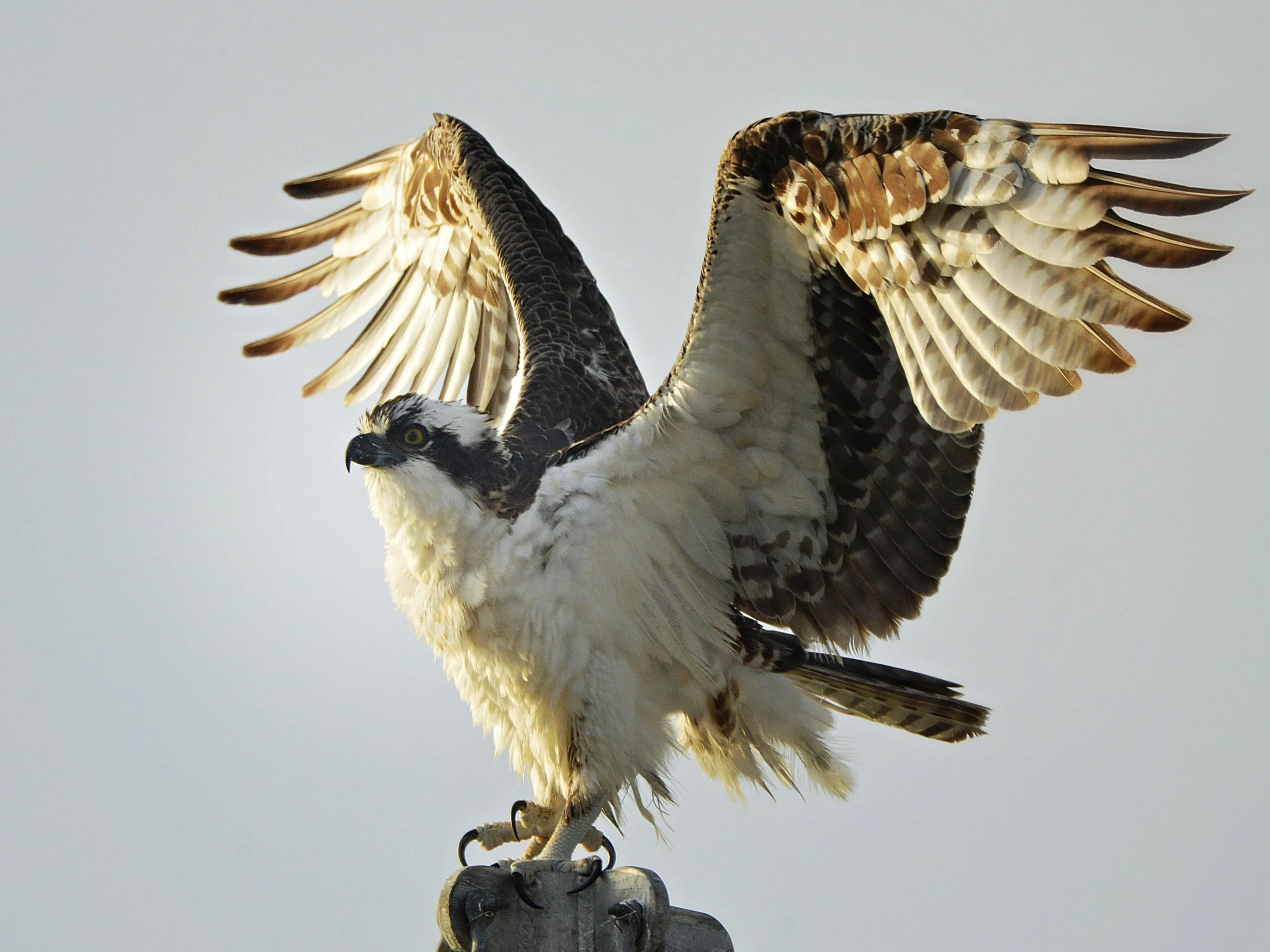
Photo Credit: Nicollet Overby (all rights reserved)
The only species in the family Pandionidae.
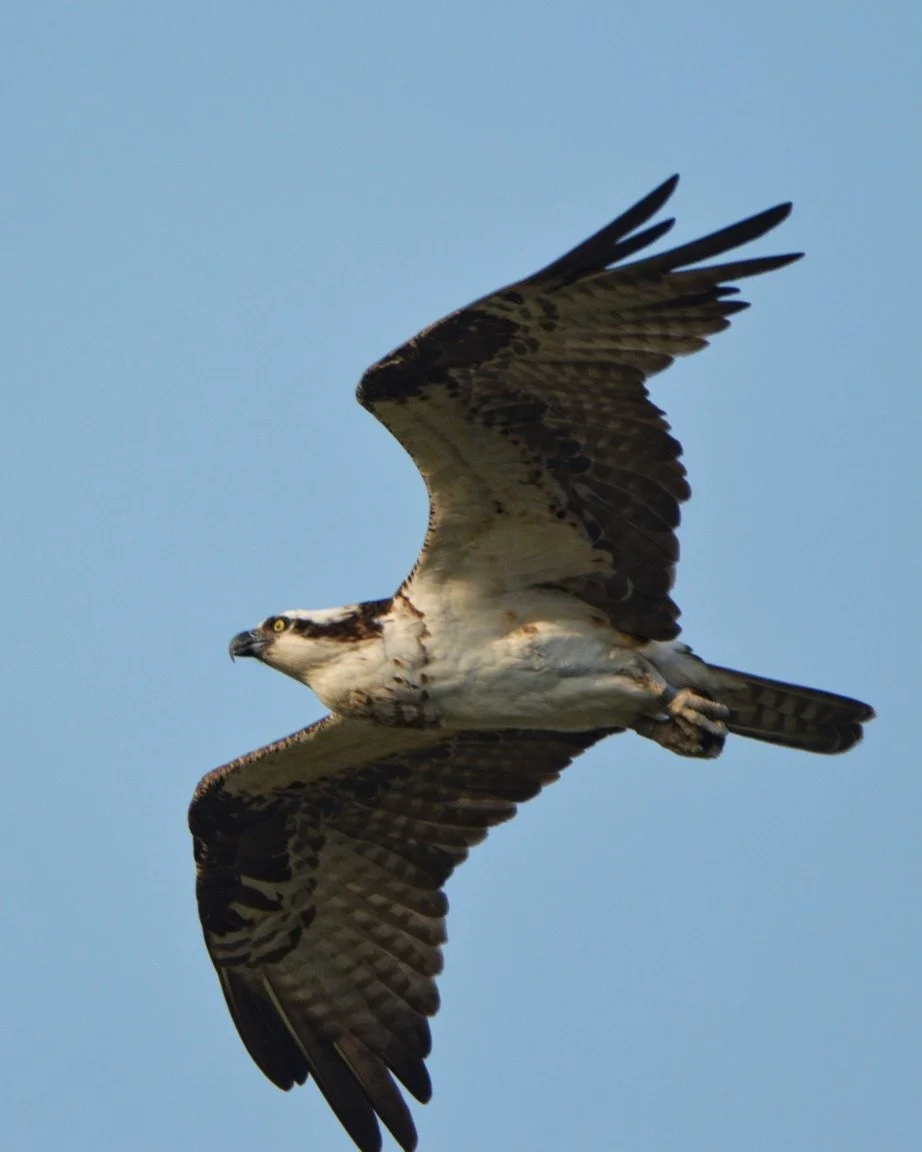
Ospreys are distributed worldwide, except in Antarctica. They will breed in North America, Europe, Asia and Australia, but are only found as winter migrants in South America and Africa.
Some populations are migratory, but others will reside year-round in temperate areas.
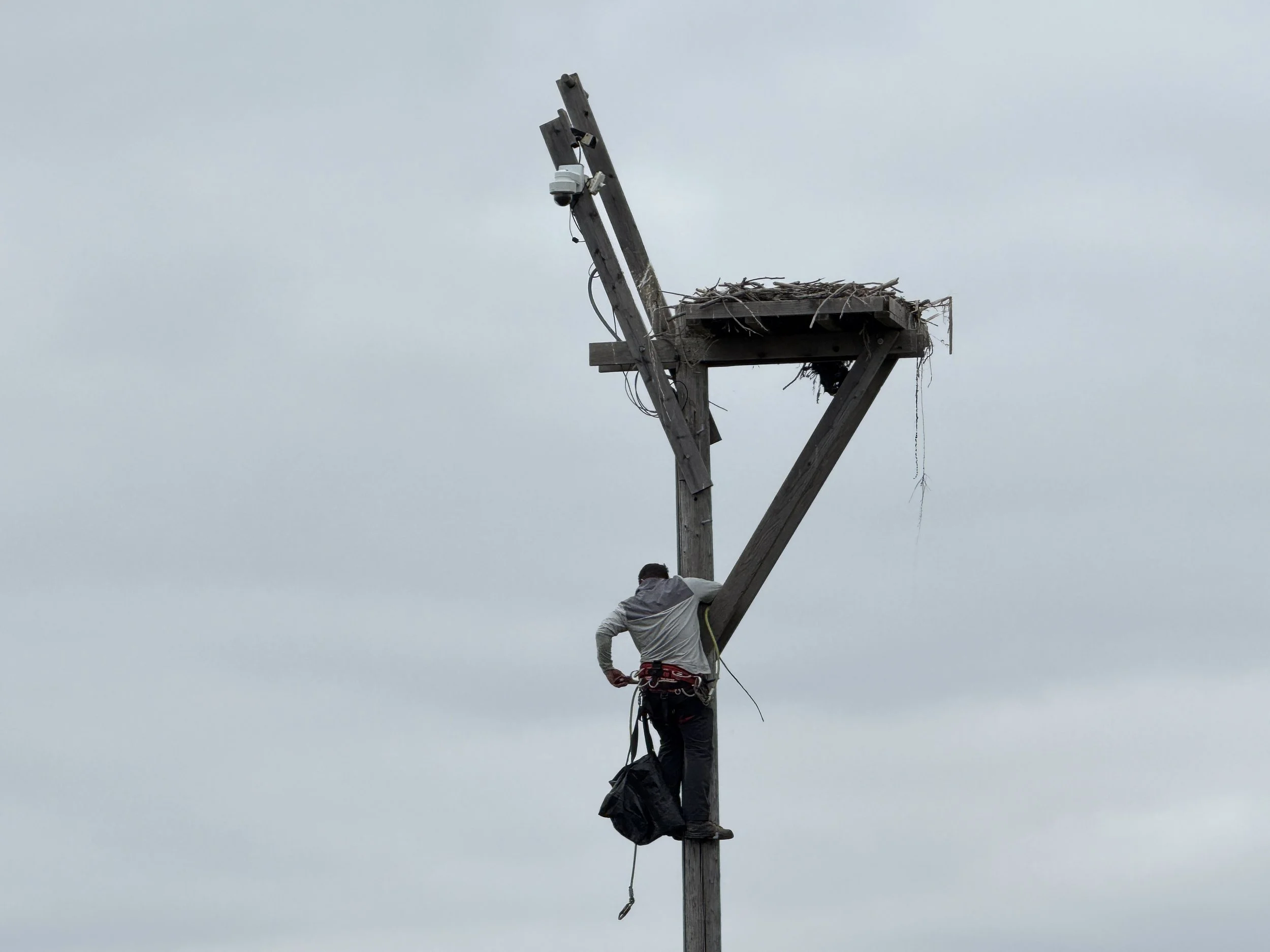
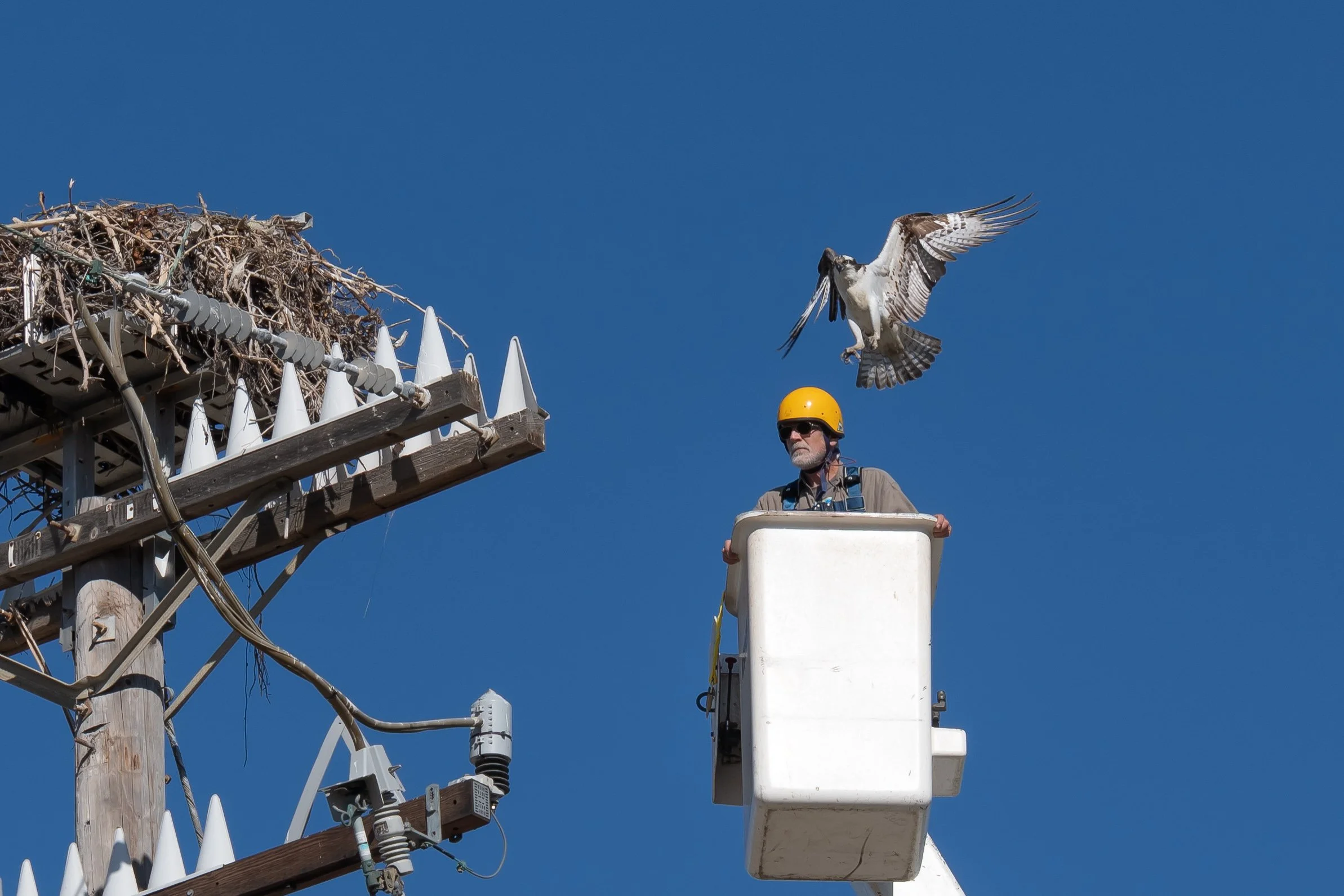
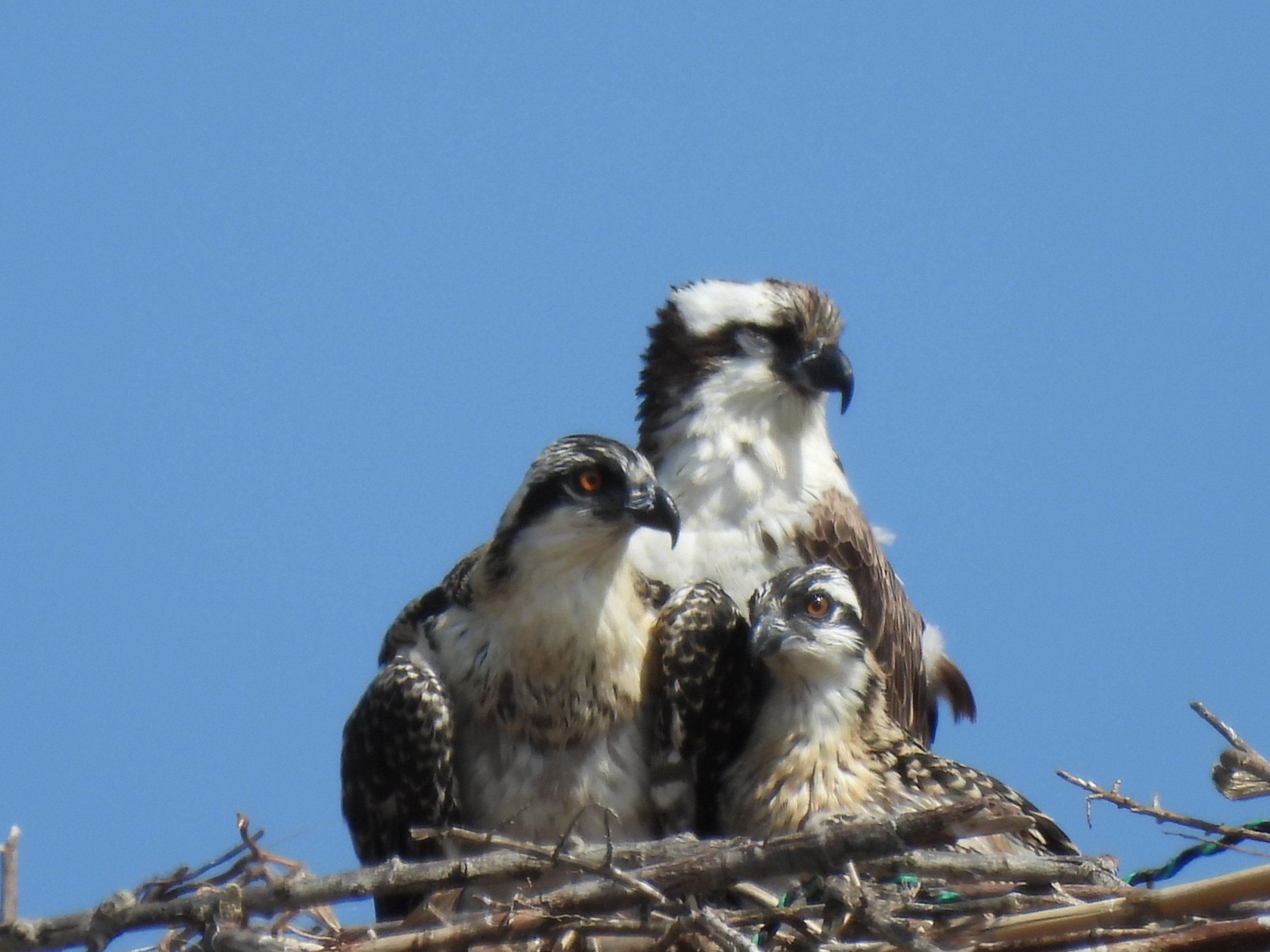
Ospreys reach breeding age at three years old, and will lay 2-4 eggs in a large nest, typically on some sort of elevated platform (power poles and light poles are a favorite in developed areas).
Like Bald Eagles, Ospreys tend to nest near water, and primarily eat a fish diet.
The claws and soles of an Osprey’s feet are specially designed for catching fish, studded with rough scales and an outer toe that that can rotate from front to back, similar to owls. This allows them to grasp their prey with two toes in front and two behind; this can help them maneuver the caught fish to face head-first, which is more aerodynamic as they are flying.
Global decline occurred in the mid-late 20th century due to widespread pesticide use, such as DDT and the metabolite of DDT known as DDE.
Reproductive success has improved since the 1970’s.
Pete Bloom is involved in Osprey research within several different areas of California - coastal Orange County (CA Dept. of Fish & Wildlife), Mono Lake (CA State Parks), and most recently Northern California in Humboldt County. In Humboldt, Pete Bloom is working with graduate student Elizabeth “Lizzi” Meisman who has been a champion for both Ospreys and Swainson’s Hawks in Northern California with long-term field research since 2022.
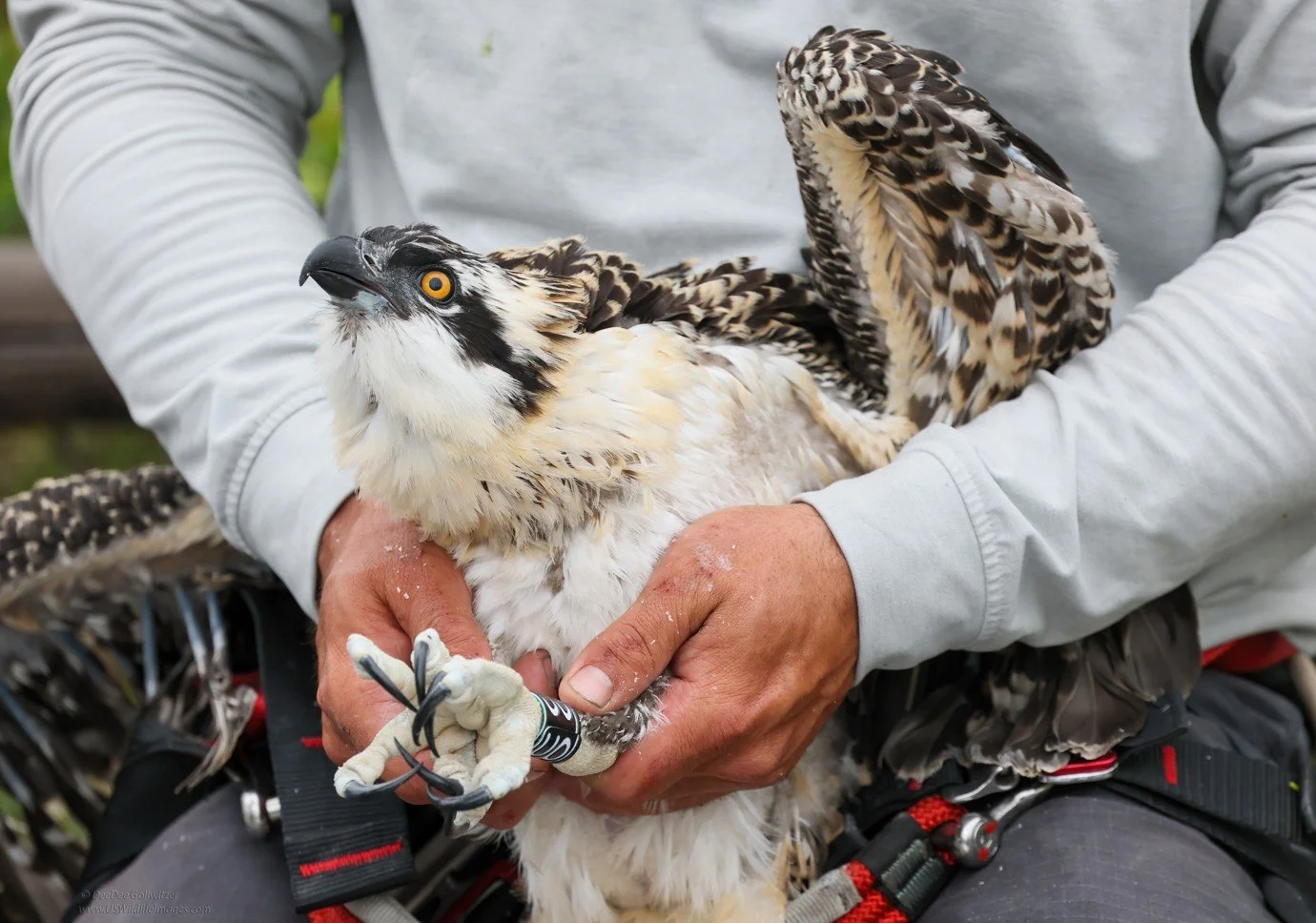
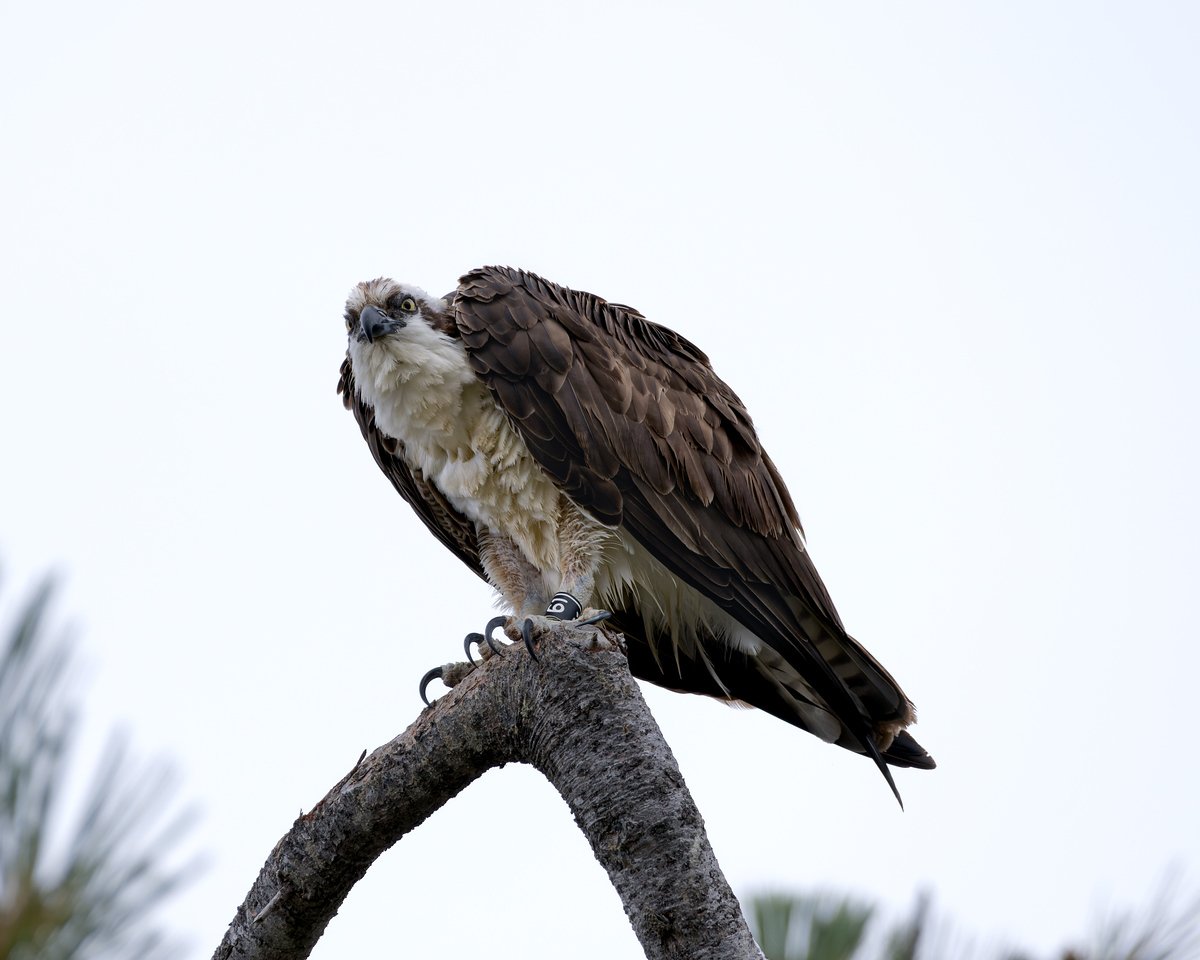
For all research projects, bands are placed on nestlings before they fledge, usually including both a metal USGS band on one leg and a plastic color band with a 2-digit code on the other. We can study their movements based on sightings of these bands reported to the USGS Bird Banding Lab (BBL). If you see an Osprey in California marked with leg bands, please report to www.reportband.gov, and feel free to contact us as well!
Bloom Research at Mono Lake:
Fields, L. E., & Pagel, J. E. (2016). Osprey occupancy of Mono Lake—unique habitat in eastern California. Journal of Raptor Research, 50(1), 97-102.
Loncaric, I., Szostak, M. P., Cabal-Rosel, A., Grünzweil, O. M., Riegelnegg, A., Misic, D., ... & Saggese, M. D. (2024). Molecular characterization, virulence and antimicrobial and biocidal susceptibility of selected bacteria isolated from the cloaca of nestling ospreys (Pandion haliaetus) from Mono Lake, California, USA. PLoS One, 19(9), e0311306.
See more on our blog - Ospreys at Mono Lake - A Conservation Story — Bloom Research,Inc.
Bloom Research in Southern California:
NEWPORT BACK BAY, NEWPORT BEACH
First active in 2006, likely the first successful Osprey breeding in Orange County in nearly a hundred years.
Original nesting platform was erected in 1993. The nesting platform was rebuilt in the fall of 2020 after a storm caused nest failure in 2019.
A banded chick from the 2008 nest was seen paired with another un-banded Osprey in 2010, building a nest at the San Joaquin Wildlife Sanctuary. This same Osprey has been seen at SJWS 6 times since then, most recently in May of 2024.
A banded chick from the 2018 nest was encountered several times in San Luis Obispo between 09/2018 thru 12/2019, then showed up in La Jolla in 05/2020 and has been one of the breeding pair nesting at the Scripps Pier since 2021. That nest has a live-stream camera (Pier Cam | Scripps Institution of Oceanography)
As of 12/31/2025, thirty-one chicks have been banded at the Newport Back Bay nest since 2008, and seventeen of those chicks have had at least one encounter (nearly 55%). Seven of the chicks are known to be deceased. The oldest Osprey in this group was known to be 16 years old when resighted in 2024.
BOLSA CHICA ECOLOGICAL RESERVE & HUNTINGTON BEACH
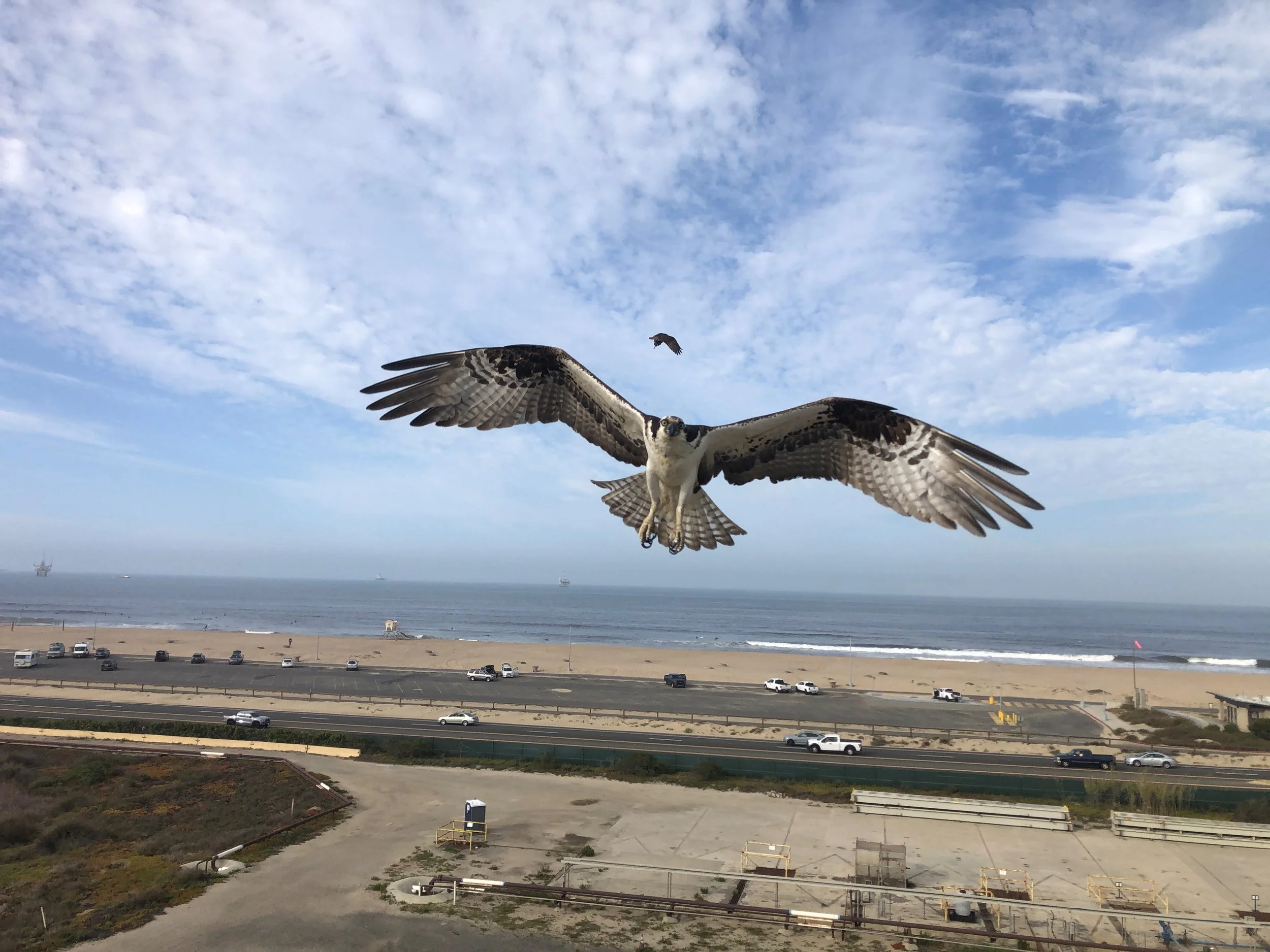
Ospreys were first observed at Bolsa Chica Ecological Reserve during the 2017/2018 nesting season, and a nest attempt was made in 2018.
Nesting has been successful since 2019, with a total of 11 chicks being banded so far (between 2021-2025). There are now three active nests in this area - one at Bolsa Chica and two in Huntington Beach.
Nine of the eleven chicks have been encountered post-fledging (~82%). As of 01/14/2026, none of the chicks banded at these nests have been reported deceased.
When funding for a lift is available, Pete is able to band the chicks directly in the nest. Over the years, we have received generous assistance from the California Resource Corporation, City of Huntington Beach Public Works-Tree maintenance team, California Dept. of Fish & Wildlife, the Huntington Beach Fire Department and Amigos De Bolsa Chica, to band the Ospreys at these nests.
A chick fledged from one of the nests in 2022 was encountered later that autumn when found injured/emaciated in El Rosario, Baja California. The Osprey was taken into care and released two days later when recovered. This is the furthest southern movement reported from these nests.
The most northern encounter was of a chick banded in 2021, resighted at Pigeon Point in Pescadero (San Mateo County, CA) at approx. 6 months of age.
Further Reading - Non-Bloom Research:
Grove, R. A., Henny, C. J., & Kaiser, J. L. (2009). Osprey: worldwide sentinel species for assessing and monitoring environmental contamination in rivers, lakes, reservoirs, and estuaries. Journal of Toxicology and Environmental Health, Part B, 12(1), 25-44.