American Barn Owls
(Tyto furcata)
Barn Owls are one of the most abundant nocturnal raptors in southern California, and are likely to be seen in every state except Alaska, as well as throughout Mexico. Their range extends from Central America up into southern Canada, although they are less abundant in the northern latitudes.
They are not native to the Hawaiian Islands, but were deliberately introduced there in the late 1950’s to help control non-native rat populations that were devastating sugarcane crops. Unfortunately, since Barn Owls are incredibly adaptable and have an extremely high reproductive rate, they quickly became well-established on the islands and their typical rodent diet began to expand to include small native shorebirds, and the presence of Barn Owls have now begun to threaten the fragile island ecosystems. On the mainland of the United States in their natural and native habitat, Barn Owls are still one of the most valuable rodent-control species.
Barn Owls have the most sensitive hearing of any animal tested. The asymmetrical placement of their ears, combined with the feather structure around their face (resembling a satellite dish) allows them to detect the exact location of sound in 3-dimensions. They can easily hear the higher frequencies of rodent vocalizations as well as extremely soft noises, such as a mouse heartbeat from 30 feet away. They also do not suffer from age-related hearing loss like other animals.
In California, the most common wild prey items include dusky-footed woodrat, desert woodrat, California vole, Botta’s pocket gopher, and pocket mouse.
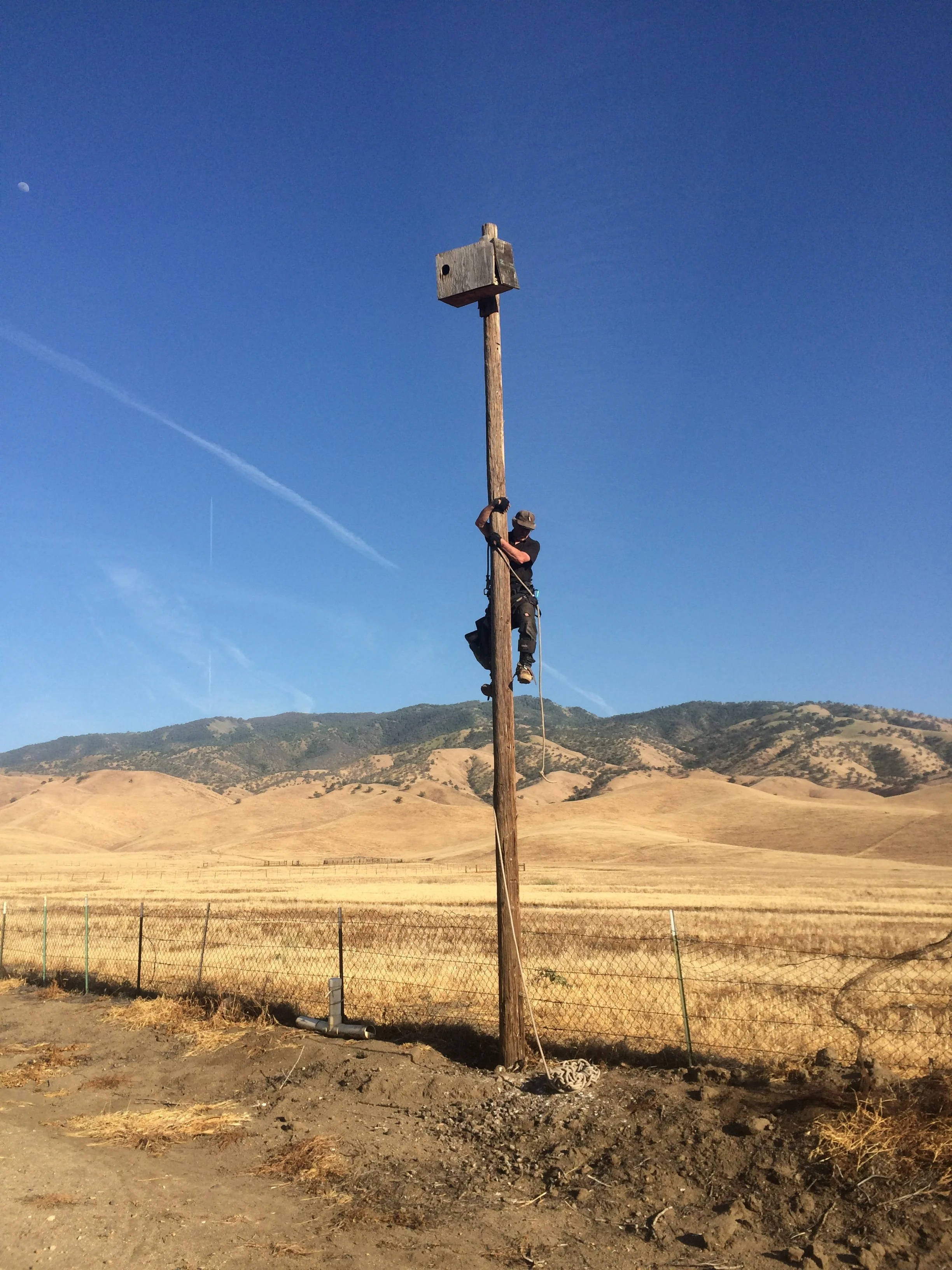
Since Barn Owls will utilize man-made nesting structures (e.g. nest boxes) and begin breeding at a young age with the ability to produce multiple clutches in years with high prey abundance, they are an excellent raptor to attract to rural and semi-rural neighborhoods as well as agricultural areas. Barn Owl families can consume thousands of small mammals like rats, mice, and gophers per year. The use use of rodenticides in developed or agricultural areas can severely affect Barn Owl populations; poisoned rodents make easy prey, and the toxic effects of the poisons (i.e. anticoagulation) will transfer to the owls upon consumption. For more information, see our page Rodenticides — Bloom Research,Inc.
During years with a high prey abundance, Barn Owls are known to have multiple (up to 3) clutches in a year, with each clutch containing up to 11 eggs.
In 2020, one Barn Owl box within a protected area of Orange County (California) produced two successful clutches containing 6 chicks each, for a total of 12 chicks belonging to one nesting pair.
Nests are found in large cavities, from those found in mature trees (usually Sycamore, or occasionally oak), to cliffs or man-made structures (i.e. nest boxes). Nesting densities can be extremely high, with up to 8-10 nesting pairs in an area less than 0.25 sq. miles.
Adults will incubate eggs for approximately 30 days and once hatched the chicks will remain in the nest cavity for 8-10 weeks.
Since Barn Owls lay their eggs one at a time over several days, the hatching and fledging period can be protracted, i.e. a nest with 10 eggs could take up to 3 weeks for all chicks to fledge.
Chicks will remain in their natal territory for approximately 1 month after leaving the nest.
While Barn Owls from Southern California may disperse as far south as Ensenada and as far north as the Antelope Valley, the populations in this area are essentially non-migratory.
BLOOM RESEARCH:
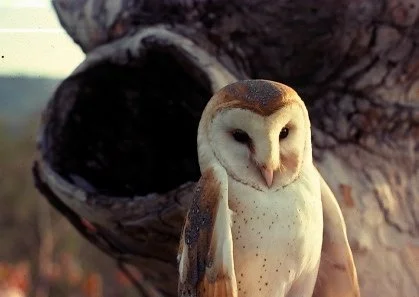
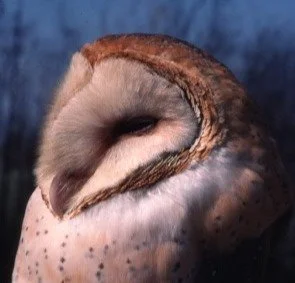
Photo Credits: Pete Bloom (all rights reserved)
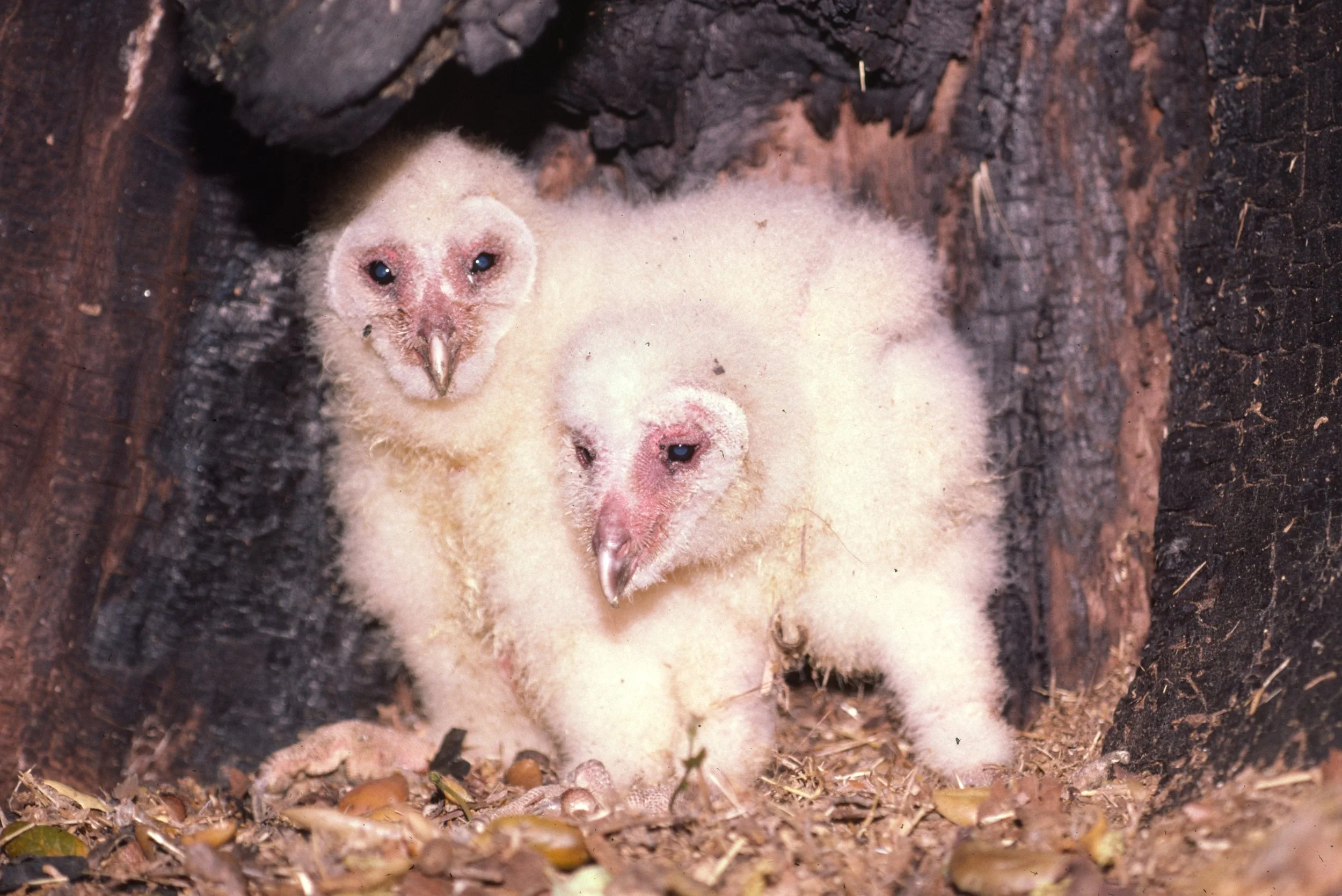
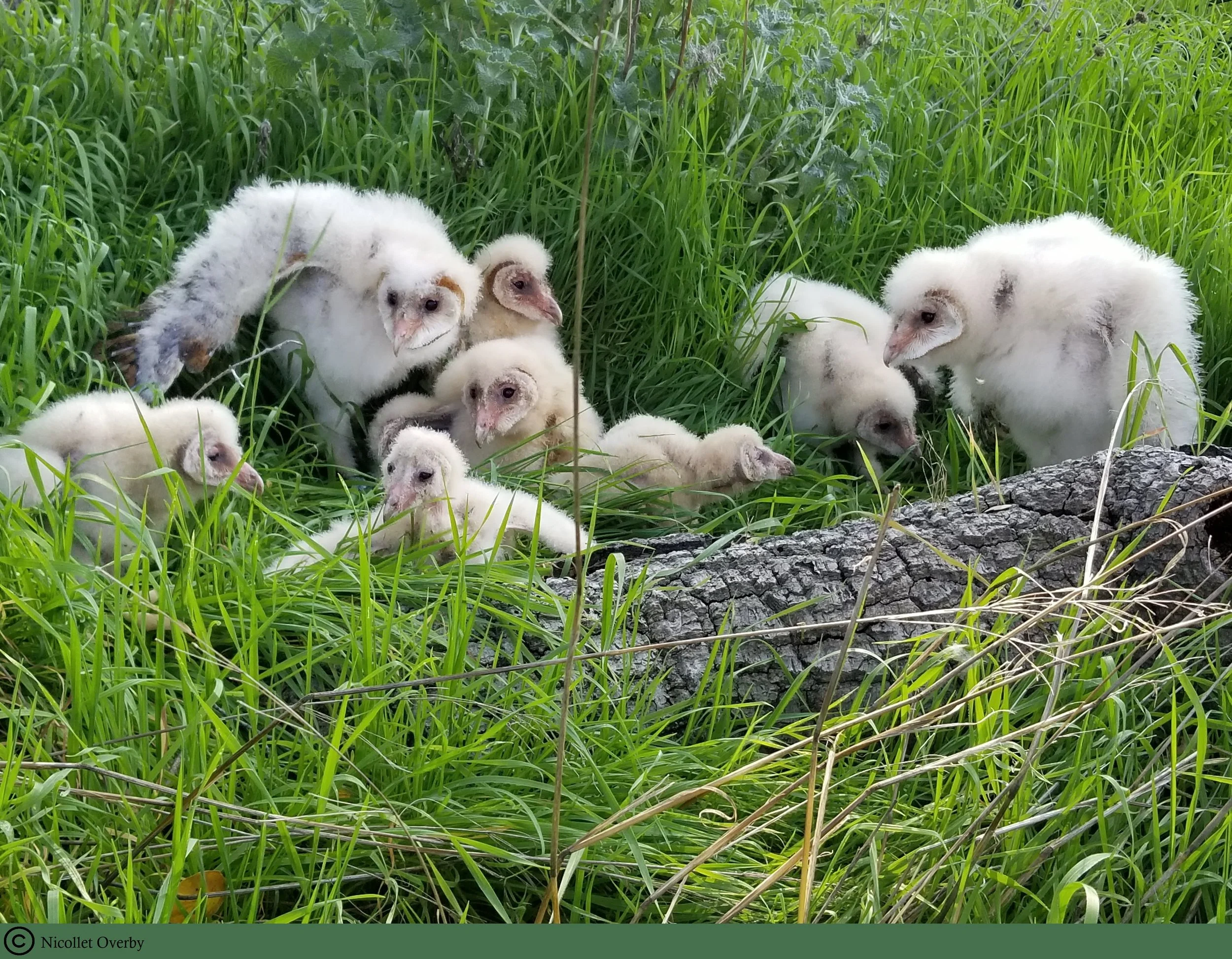
In this photo, you can see the various ages/sizes of this brood of eight chicks, all from one nest box. These chicks were temporarily on the ground during a permitted banding project.
Thomsen, S. K., Kroeger, C. E., Bloom, P. H., & Harvey, A. L. (2014). Space use and home-range size of Barn Owls on Santa Barbara Island. Monographs of the Western North American Naturalist, 7(1), 339-347.