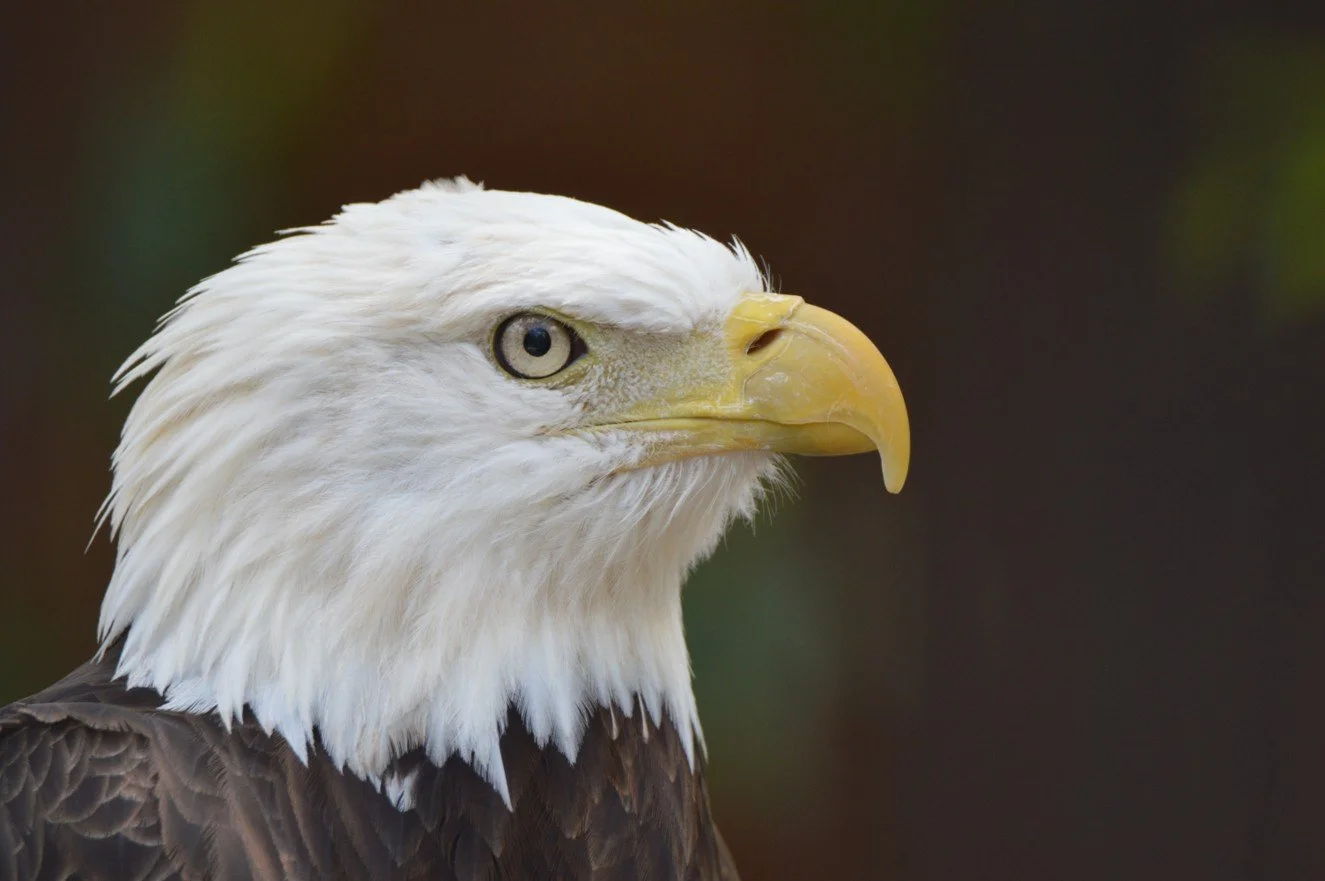
Photo Credit Nicollet Overby (all rights reserved)
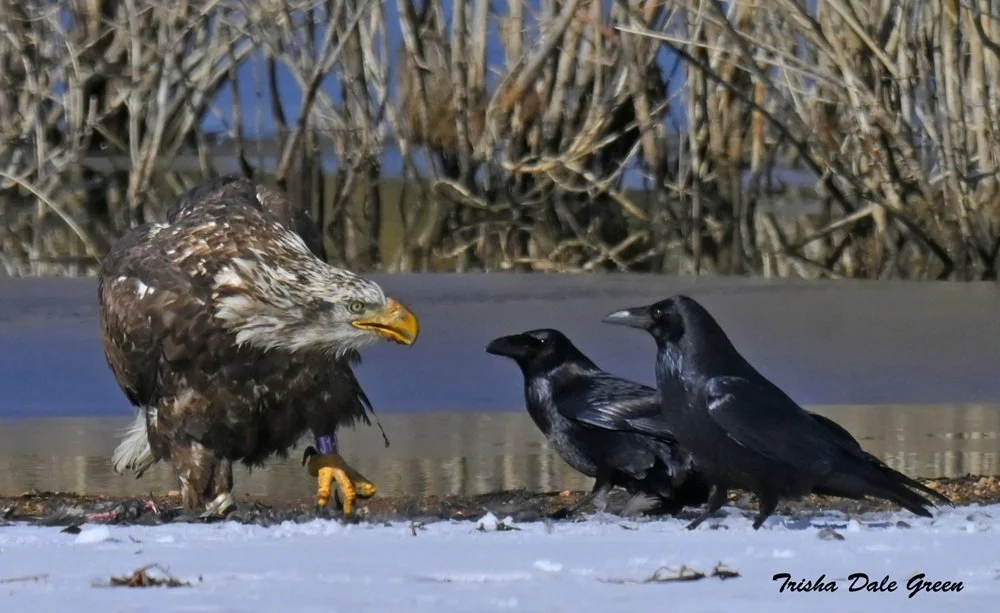
Photo Credit Trisha Dale Green - all rights reserved (used with permission)

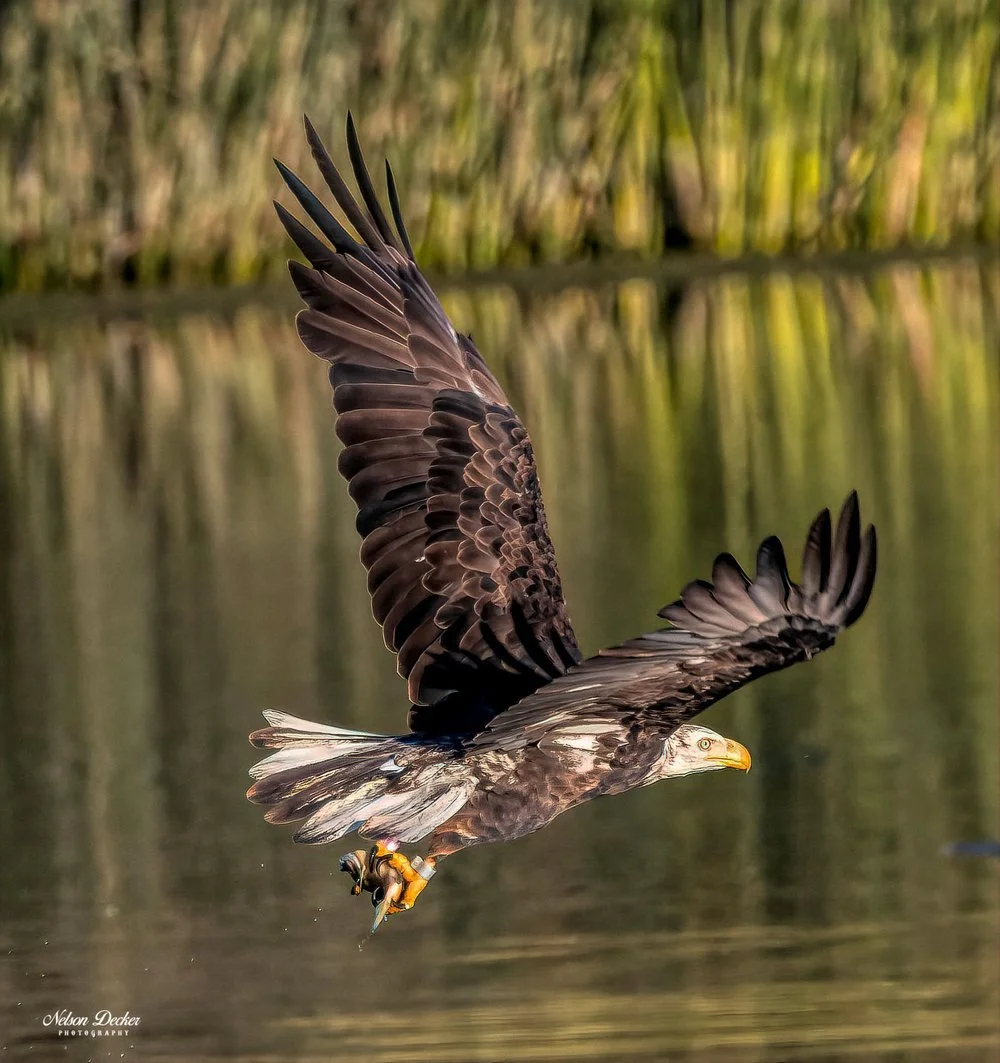
Photo Credit Nelson Decker - all rights reserved (used with permission)
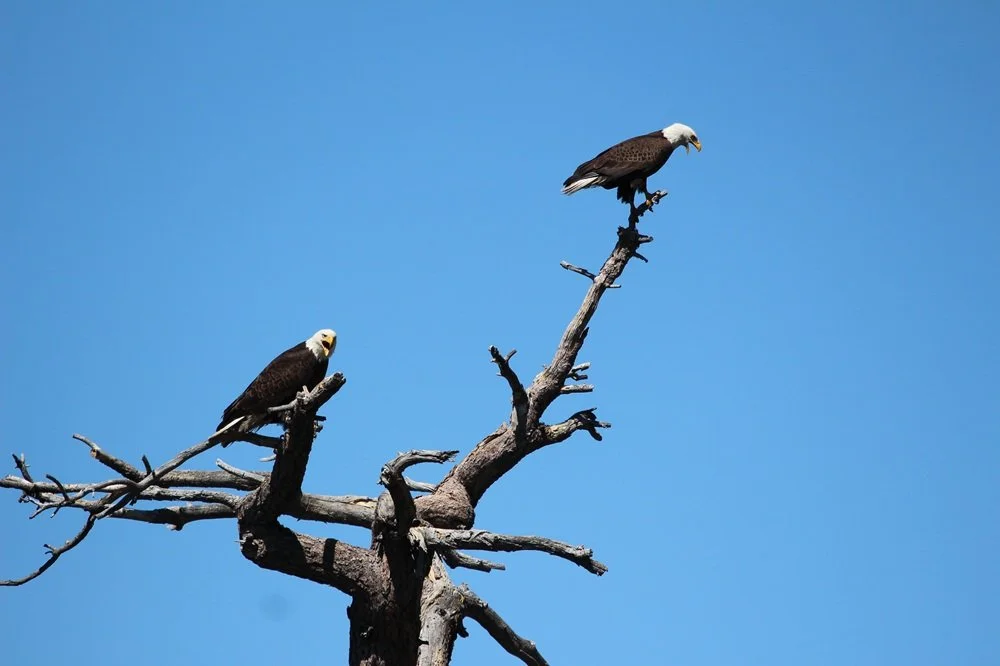
Photo Credit Pete Bloom - all rights reserved
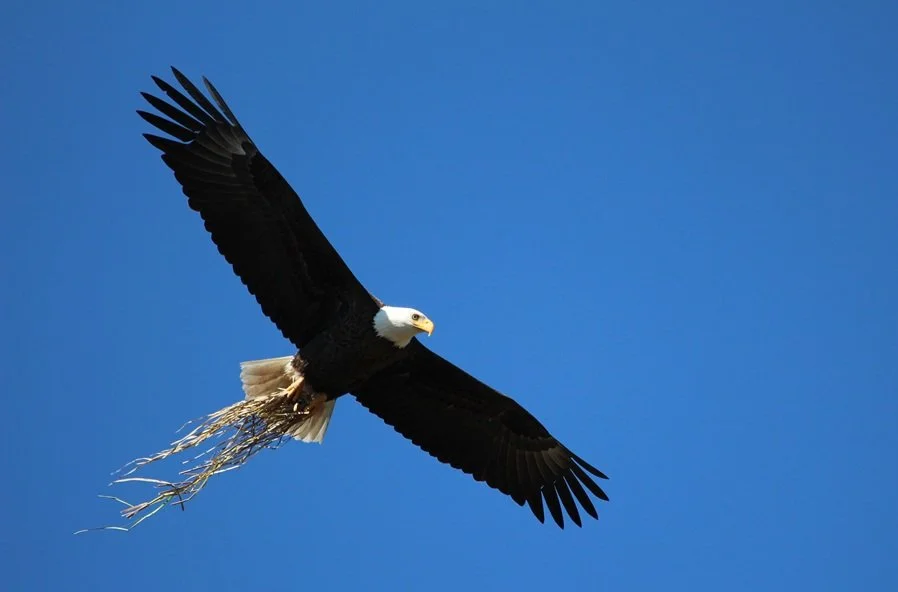
Photo Credit Pete Bloom - all rights reserved
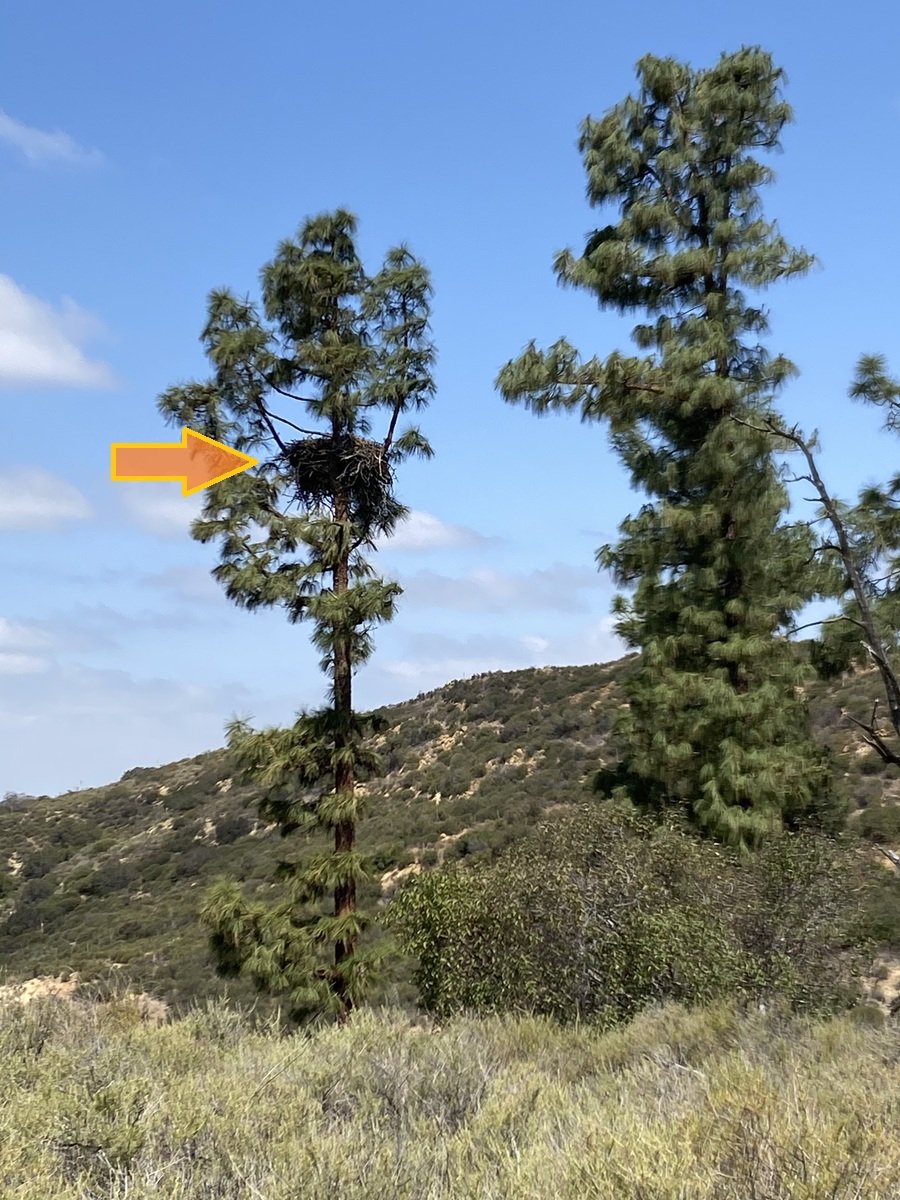
Photo Credit Pete Bloom - all rights reserved
Bald Eagles
(Haliaeetus leucocephalus)
The Bald Eagle is native to, and only occurs within North America - throughout Alaska and across Canada down through the lower 48 states and into northern Mexico. It is one of the largest raptors in North America, with a wingspan up to 7½ feet.
Bald eagles mature slowly and develop the classic and easily recognizable solid white head between 4.5 – 5.5 years of age. Until then, they are sometimes mistaken for juvenile Golden Eagles since they have a similar appearance.
They have incredible eyesight and can detect their prey from over 3 miles away. Their primary food source is fish, although they will also hunt waterfowl, small mammals, and reptiles when fish is not easily available. Carrion is also readily consumed when live prey is less abundant.
Bald Eagles are opportunistic foragers and therefore food habits are highly varied across their range and are site-specific, based on prey species available. They can also be lazy shameless scavengers and will harass other birds like Ospreys to steal their fish, and in places like Alaska have been known to hang out at landfills.
Bald Eagle populations first began to decline in the late 1800’s because American settlers erroneously believed the eagles would be a competitive threat to their livestock and fish, and so, like many other top predators, Bald Eagles were killed indiscriminately.
In 1940, the Bald Eagle Protection Act was passed which made it illegal to kill, possess, or transport Bald Eagles and/or their eggs, or to harass or cause damage to their nests. This act was amended in 1962 to include Golden Eagles as well.
Despite these protections, Bald Eagle populations continued to decline due to new problems like lead poisoning, electrocution (entanglements with power lines), and widespread utilization of the pesticide dichloro-diphenyl-trichloroethane (“DDT”) and the metabolite of DDT known as DDE, which drastically reduced their reproductive success. The use of DDT was banned by law in 1972.
The Endangered Species Act was established in 1973, which listed the Bald Eagle as Endangered and required recovery plans to be enacted, as well as prohibited hunting/shooting Bald Eagles and provided protections for their habitats.
Bald Eagles were removed from the Federal Endangered Species List on June 28, 2007 when the species hit a recovery milestone, but they remain protected under the Federal Bald and Golden Eagle Protection Act, as well as the California State Endangered Species Act and the Federal Migratory Bird Act.
Prior to 2010, when a nest was discovered at Irvine Lake, Bald Eagles had not nested in Orange County (California) since 1927 (Hamilton and Willick 1996). There are now three known nest territories in Orange County, and at least 8 other breeding pairs in surrounding counties.
Bald Eagles are monogamous - they mate for life and will reuse the same nest throughout their lives.
Bald Eagles build the largest nests of any North American bird - these nests are often 5-6 feet in diameter and can weigh up to a ton! They typically nest near water sources with abundant prey, in large mature trees or along cliffsides between October (southern latitudes) to April (northern latitudes). Each clutch contains between 1 - 3 eggs, and incubation duties are shared between the male and female. While one parent is on the nest, the other will be out hunting and will bring prey back to the nest to share with their mate and eventually the chicks.
BLOOM RESEARCH:
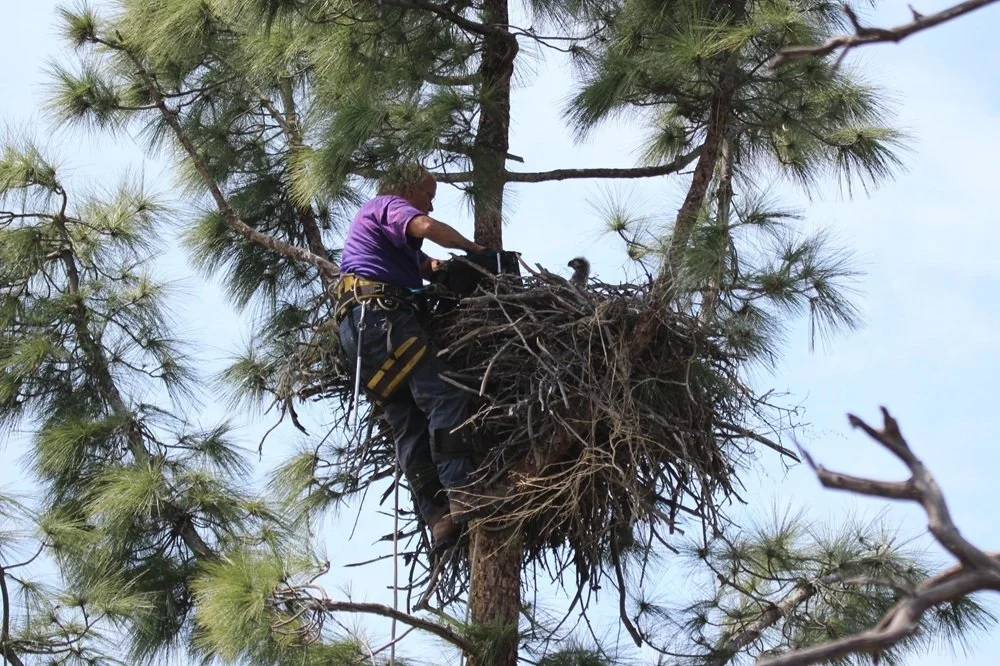
In southern California, we are fortunate to be able to observe many different species of raptors, including both Bald and Golden Eagles. We are able to study movements in these birds of prey, answering questions such as where do these species go when they fledge from their nest, and where do they end up choosing to nest once they are mature? In order to find such answers, Pete Bloom is permitted by the United States Geological Survey (USGS) to place lightweight metal identification leg bands on nestlings while they are still in the nest. For more information on these bands and how to report it if you see one, please see our page on Bird Banding.
In 2017, Bloom began adding color bands, made of a colored aluminum material for durability, in addition to the standard metal USGS bands on nestling bald eagles. Between 1985 - 2025, sixty-two Bald Eagle nestlings have been banded by Bloom. Since 2017, thirty-one of those Bald Eagle chicks from five different nests in southern California have been fitted with the more visible color bands. Almost half of the encounters reported on these color bands have been at Big Bear Lake - this is likely due in part to the amount of visitors to that area as well as the fact that it is a well-stocked lake in a fairly remote location that provides an excellent stopover point for the young eagles. As Bald Eagles slowly make their comeback in southern California, these color bands have been very successful in allowing us to monitor the movements and status of this species, as we have done for other raptor species.
At least two bald eagles banded by Bloom are known to have had remarkable journeys documented by encounter reports; the first, a three-year old bald eagle, banded as an adult in 1986 near Clear Lake, CA in was found injured in Alberta (Canada) in 1987, approximately 1200 miles (~ 1900km) from the original banding location, and the second was a bald eagle banded in Orange County as a nestling in 2014 and found deceased in Klamath Falls (Oregon) in 2016, approximately 625 miles (~ 1005km) from the original banding location.
The furthest encounter was of a hatch-year Bald Eagle (approx. 6 months old) found deceased in the southwestern part of Tehama County, CA approx. 156 miles from their nest location.
One chick banded in 2014 (San Diego County) was encountered for the first time in 2024 (San Bernardino County); the first 10 years of this eagle’s life are a complete mystery, but this sighting still provides a valuable data point for our research. Another potential long-lived individual was officially reported in 2017 at a nest in Los Angeles County. A photographer’s diligent efforts captured the entire sequence of the single USGS band which verified that this was a Bald Eagle banded by Bloom as a chick in 2012 at a nest in Orange County (prior to our use of color bands), making it five years old at the time. Unofficial reports have stated that the banded eagle has continuously returned in subsequent years to that same nest through at least 2022 - since Bald Eagles mate for life it is likely that it is the same individual, although we can only know for certain if the band number can be photographed again or if the bird is recaptured.
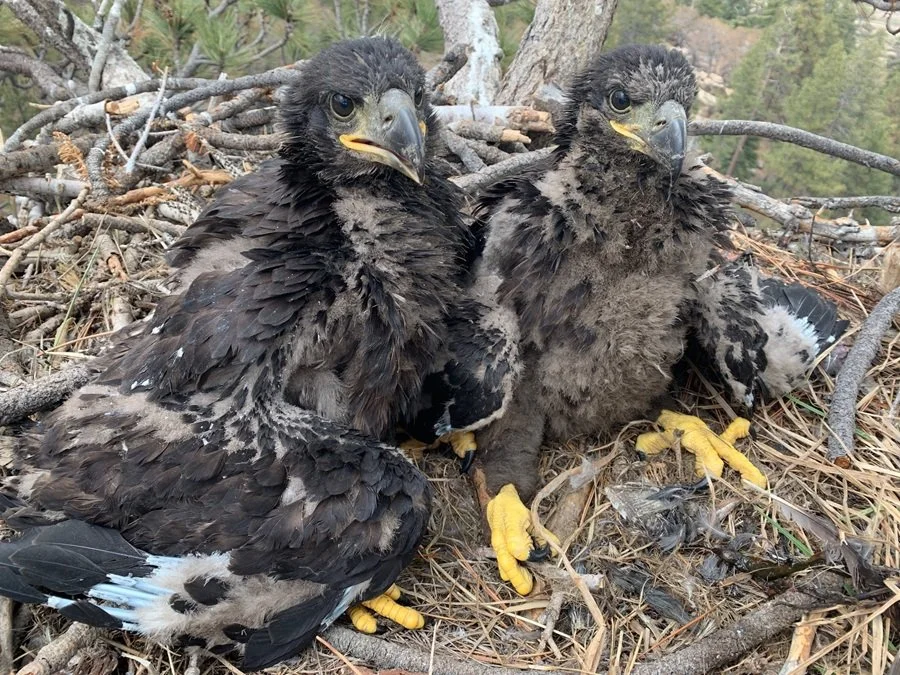
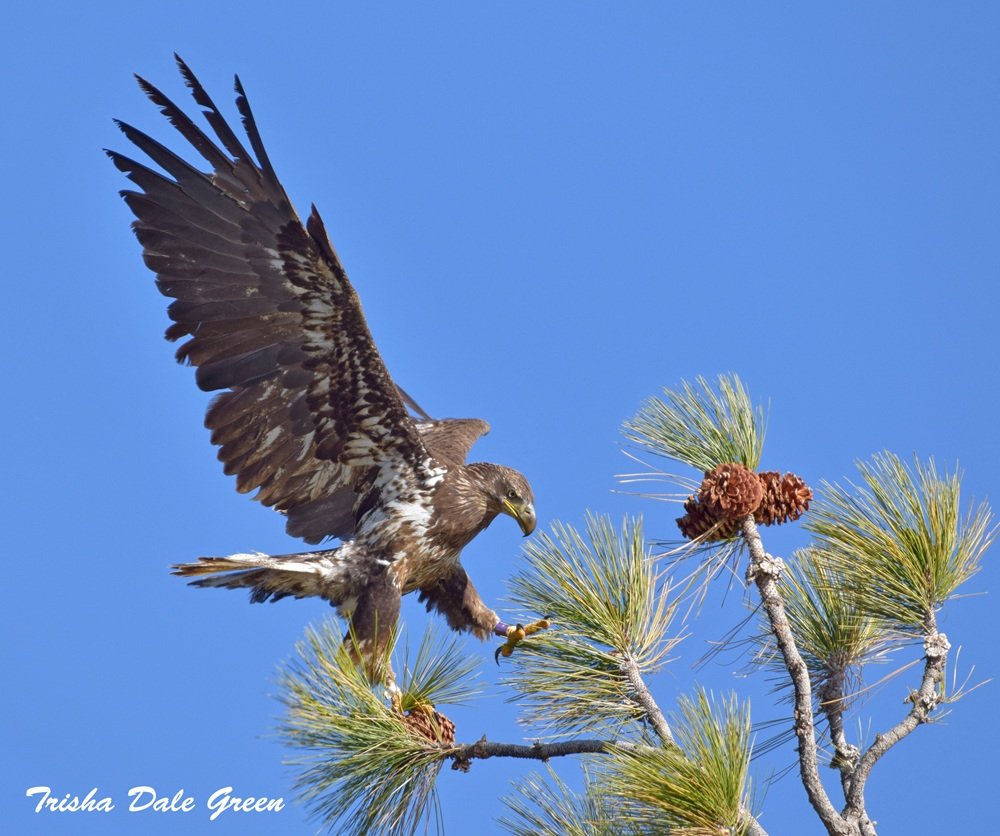
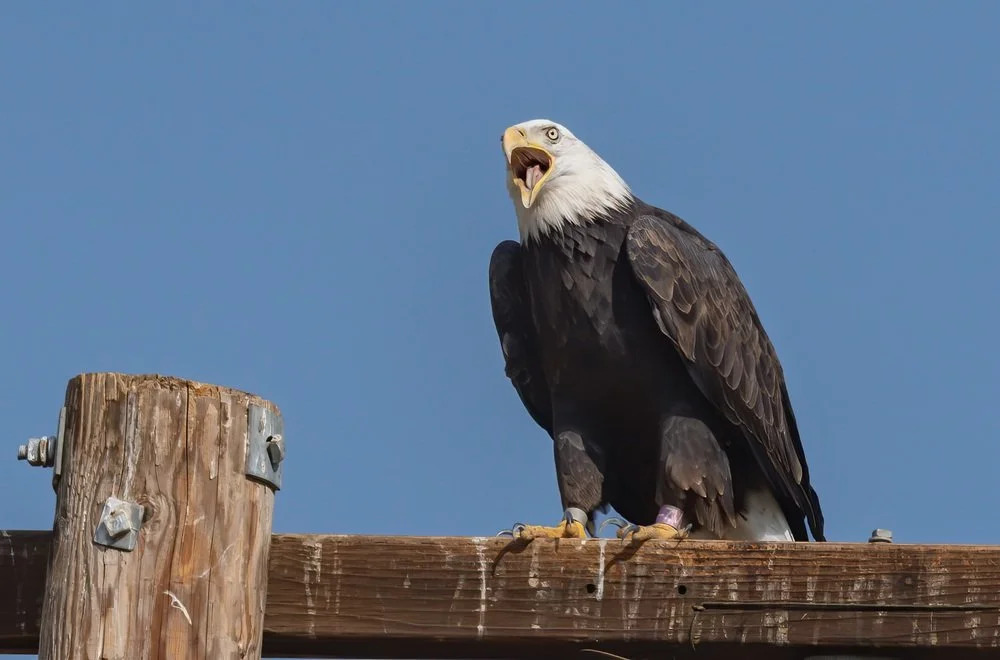
To know with certainty that the same eagle is being seen in a particular location can be priceless for research. This was recently illustrated with three separate reports of a juvenile Bald Eagle at Big Bear Lake in 2020 – while most people initially assumed this must be one of the chicks from the Big Bear nest, the juvenile ended up being positively identified by its color band on each occasion as one of the Bald Eagles from a 2018 nest near Silverado, CA. We have also been able to determine that at least one Bald Eagle who was rehabilitated after sustaining injuries in the wild has survived for three years after being released back to the wild, based on official reports of the color band.
The first few years of a young bald eagle’s life can be precarious – they are often nomadic, travelling long distances before settling on a territory. Bald Eagles, especially inexperienced juveniles, often fall victim to electrocutions via powerlines, and vehicle strikes, as well as poisoning (i.e. lead). In California and other states with large wind power farms, turbine strikes are also a hazard. Bloom has worked with various agencies to ensure power lines are retrofitted to prevent raptor electrocutions, and that wind farms have the necessary detection protocols in place to prevent large bird strikes. We also encourage everyone to drive with wildlife in mind - small mammals are a common tragic victim of vehicle strikes, and that roadkill will in turn attract opportunistic predators and scavengers, leading to more roadside tragedies.
If in the past you happened to take a photo of a Bald Eagle (or any bird) with a color band, and didn’t know how to report it - it’s not too late! As long as you know the location it was seen and the date the photo was taken (sometimes recorded in the photo metadata), you can still submit it to www.reportband.gov.
In addition to banding Bald Eagle chicks, blood samples are collected as well to be used for biological testing (i.e. blood lead levels, genetic testing, and other health markers) when funding is available. Typically, funding for Bloom’s Bald Eagle banding efforts are generously sponsored by local non-profits and/or government agencies, and the cost of color bands can also be funded by donations collected from the public or from grants. We are hopeful that as Bald Eagles continue to re-establish populations throughout Southern California, we will continue to be invited to band chicks at new and existing nests. These birds still have a lot to teach us!
PUBLISHED RESEARCH:
Slabe, V. A., Anderson, J. T., Millsap, B. A., Cooper, J. L., Harmata, A. R., Restani, M., ... & Katzner, T. E. (2022). Demographic implications of lead poisoning for eagles across North America. Science, 375(6582), 779-782.